Choosing ant protein food is less about finding the insect with the highest protein percentage and more about offering something your colony can safely access and use. Frozen feeder insects are a practical starting point for many insect-eating species, while dried insects and formulated foods offer convenience with some trade-offs. Seed-harvesting ants need a different comparison altogether.
This guide compares the main options by acceptance, preparation, storage and waste. The aim is to help you choose a dependable staple, identify useful supplements and adjust portions without leaving excess food to spoil inside the enclosure.
What protein does for a captive colony
Protein supplies amino acids used in growth, tissue maintenance and egg production. Developing larvae create much of a growing colony’s demand, so a colony with substantial brood may use noticeably more insect food than one with mostly adult workers.
Adult workers also need carbohydrates for energy. Protein does not replace a species-appropriate sugar source or clean water. Nor does giving extra protein automatically produce faster, healthier growth: temperature, season, queen condition and available nest space also affect colony development.
Species matters just as much as colony size. Many commonly kept Lasius and Formica colonies accept insects alongside carbohydrates, whereas seed-harvesting species can obtain substantial nutrition from seeds. Founding strategies also differ, so feeding advice for an established colony should not automatically be applied to a newly collected queen. Our guide to feeding ants at different stages of colony growth explains those distinctions in more detail.
Which ant protein food is best for captive colonies?
For many insect-eating colonies, appropriately sized, pre-killed feeder insects make a useful baseline. Other formats can be worthwhile, but convenience and nutritional suitability are not the same thing.
| Food format | Main advantage | Main limitation | Practical role |
|---|---|---|---|
| Freshly killed feeder insects | Moist tissues are readily accessible when opened | Require regular sourcing and prompt cleanup | Staple option for many insect-eating species |
| Frozen feeder insects | Easy to portion and keep on hand | Need hygienic thawing and suitable storage | Convenient staple where accepted |
| Dried insects | Convenient storage before opening or rehydration | Hard, dry tissues may be poorly accepted | Backup or supplementary option |
| Formulated protein foods and jellies | Convenient serving and little preparation | Composition and acceptance vary considerably | Supplement unless suitability as a complete diet is established |
| Seeds | Appropriate staple for seed-harvesting species | Unsuitable as a universal substitute for insects | Species-specific foundation |
Acceptance varies between colonies, even within a species. Buy small quantities initially and compare what is actually consumed rather than choosing a large supply based on its label alone.
Freshly killed insects: accessible but perishable
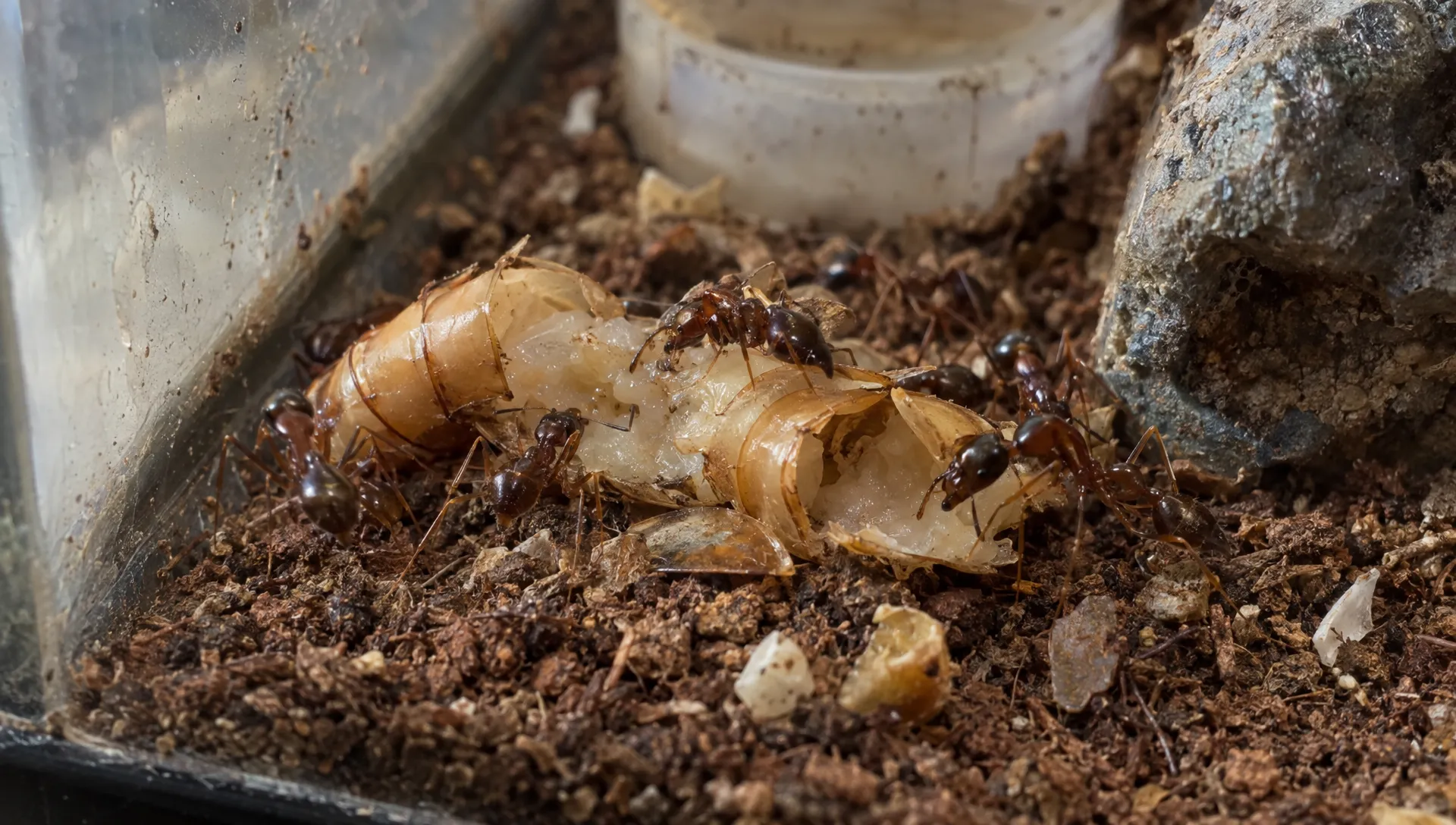
Small crickets, mealworms and other legally sourced feeder insects can provide accessible tissues when cut open. A whole insect with a tough exterior may be ignored even when the colony needs protein.
Freshly killed insects are a useful ant protein food when you can offer small portions and remove leftovers promptly. Cut a larger feeder into manageable pieces on a clean surface rather than expecting a few workers to penetrate its outer covering.
Live prey is usually unnecessary for routine feeding. It can injure workers, disturb a small colony or hide in the outworld. Pre-killed prey avoids much of that risk, although specialist predatory species may require more individualised feeding advice.
Frozen insects: a practical everyday choice
Frozen feeders let you keep several small portions available without maintaining a live feeder culture. They also make it easier to offer variety without purchasing more live insects than a young colony can use.
Freeze feeders in small batches so you can remove only what is needed. Thaw a portion before serving and expose the soft interior if the insect has a substantial outer covering. A large frozen insect is not automatically a suitable serving simply because it fits in the outworld.
Freezing is a storage method, not sterilisation. It does not reliably eliminate every pathogen, parasite or chemical contaminant, so the quality and origin of the feeder still matter.
Dried insects: convenient, with acceptance limits
Dried mealworms and similar products are easy to store, but a dry, intact insect can be difficult for a small colony to exploit. Some ants remove little from it even after prolonged investigation.
If you use dried insects as ant protein food, try a small crushed or opened piece first. Briefly rehydrating a separate portion with clean water may make its tissues more accessible. Do not moisten the whole container, since that compromises the storage conditions of the remaining supply.
Once rehydrated, treat the food as perishable. Drying does not make an insect nutritionally identical to fresh prey, and a high protein percentage on the packet does not establish how much your colony will consume.
Protein jellies and formulated diets: check the contents
Jellies, powders and pastes differ widely. Some are predominantly carbohydrate sources with added nutrients; others contain more substantial protein ingredients. The word “protein” on the label is not enough to compare them fairly.
Look for an ingredient list, a declared protein content where available, storage instructions and a clear explanation of intended use. A wet jelly and a dried insect cannot be compared meaningfully by headline percentages alone because their water contents differ.
For example, Ant Farms Calgary’s mixed ant protein jelly pots are described as supplementary food. That distinction matters: a supplement should not automatically displace the colony’s established diet.
A formulated ant protein food can be convenient, but acceptance does not prove nutritional completeness. Unless there is good evidence that a product meets your species’ full dietary needs, use it alongside suitable staple foods rather than assuming it replaces them.
Seeds: essential context for harvester ants
Seed-harvesting ants, including many Messor species, obtain protein as well as other nutrients from seeds. Their dietary needs cannot be assessed using an insect-only feeding plan.
Choose seeds suited to the species and its ability to process them. Some harvester colonies also accept insects, particularly during brood growth, but the balance varies. Do not replace a functioning seed-based diet simply because another keeper feeds insects more frequently.
Keep seed stores separate from wet feeding areas where possible. Seeds carried into persistently damp conditions can germinate or develop mould, creating a different cleanup problem from an uneaten insect.
Preparing and storing feeders safely
Start with a reliable source
Use feeder insects raised for animal feeding rather than insects collected from sprayed gardens, roadsides or unknown environments. Wild prey may carry pesticide residues or other contaminants that cannot be identified by appearance.
Food hygiene is part of choosing ant protein food, not a separate concern. Wash your hands, clean preparation tools and keep feeder portions away from surfaces used for human food preparation. Do not offer seasoned meat, processed foods or insects that smell abnormal or show visible mould.
For keepers in Canada, check applicable rules before importing or keeping unfamiliar live feeder species. A species sold elsewhere may not be permitted in your province or suitable to maintain at home.
Thaw only the portion you need
Keep frozen feeders in a sealed, labelled container and follow the supplier’s storage guidance. Dividing them before freezing reduces repeated handling and unnecessary thawing.
Thaw small portions in a clean, covered dish shortly before feeding, or use the refrigerator if preparing them ahead. Do not leave a large batch warming on a counter for hours. Use thawed portions promptly and discard leftovers rather than repeatedly thawing and refreezing them.
Store dried feeders sealed, cool and dry according to the packaging. Use a clean utensil to remove each serving, particularly if other portions have been moistened. For jellies and prepared diets, follow the product’s instructions after opening rather than assuming all formulations keep equally well.
Choosing portions and feeding frequency
Start with an amount the workers can access, not an amount that looks substantial to you. For a tiny colony, a pinhead-sized exposed piece of soft insect tissue can be a more useful trial than an entire mealworm. Larger colonies may need several pieces or more frequent offerings.
The right amount of ant protein food depends on brood demand, species, temperature and recent consumption. Worker count helps provide context, but it is not a reliable portion calculator on its own.
For an established, actively growing insect-eating colony, a few small offerings spread through the week can provide a starting trial. Adjust from there rather than treating that schedule as a requirement. Colonies with substantial larvae may consume more, while colonies entering a species-appropriate seasonal slowdown may accept less.
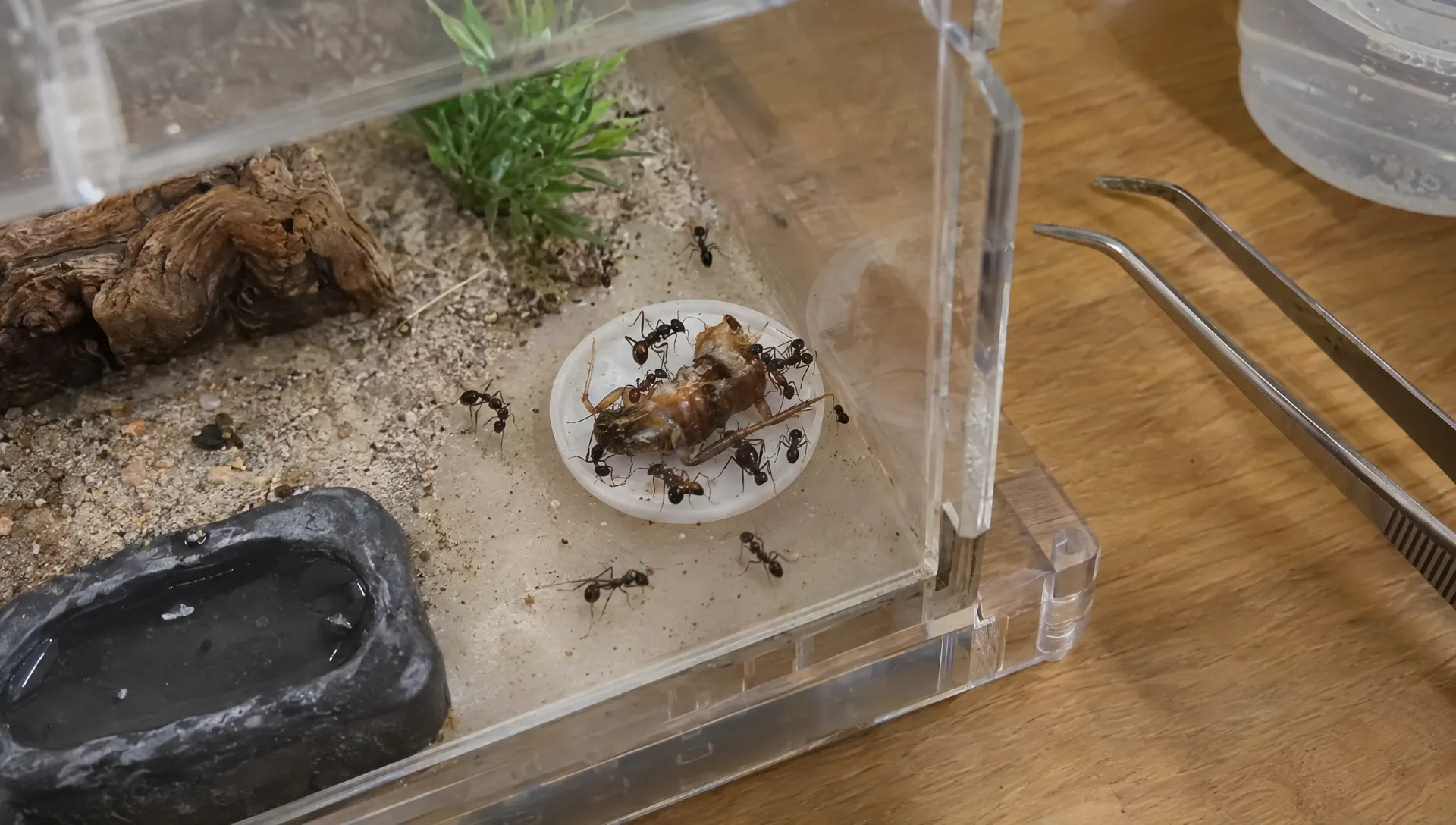
Serve moist protein on a removable feeding dish in the outworld. Check it within a few hours and, as a conservative starting routine, remove uneaten portions within 12 to 24 hours. Remove them sooner in warm, humid conditions or whenever they become discoloured, slimy or mouldy. An ignored serving is not a reason to keep adding fresh food beside it.
How to tell whether the colony is eating enough
Watch what happens to the edible material. Workers may spend time inspecting food without consuming much, while an apparently intact insect can sometimes be mostly an empty outer covering.
Useful observations include whether workers feed at exposed tissues, recruit nestmates or carry small pieces inward. Over longer periods, look at larval development and the colony’s general activity, recognising that seasonal changes and husbandry conditions also affect both.
When assessing ant protein food, compare similar offerings under similar conditions. A simple record of food type, approximate portion and leftovers is more useful than changing several things after every rejected meal.
| Observation | Possible explanation | Sensible next step |
|---|---|---|
| Workers inspect an intact insect but do not feed | The outer covering may limit access | Open it and offer a smaller piece |
| Soft tissue disappears and shell remains | Much of the usable portion may have been consumed | Judge the tissue removed, not just the remaining shell |
| Repeated portions remain untouched | Low demand, poor acceptance or unsuitable conditions | Remove leftovers and review brood, season and husbandry |
| Food is carried into the nest | It may be used or stored where you cannot see it | Avoid adding more solely because the dish is empty |
Persistent refusal alongside unusual worker deaths, dehydration or declining activity calls for a broader husbandry review. Switching protein sources alone will not correct an unsuitable nest environment.
Use keeper reports as comparisons, not prescriptions
Community discussions can suggest foods worth testing, especially when the keeper identifies the species and brood stage. However, distinguish husbandry observations from commercial recommendations. Services such as Redditor AI offer businesses lead generation and automated engagement, so a recommendation in a discussion is not necessarily independent advice.
Give more weight to clear feeding observations and relevant colony details than to confident claims that one product works for every ant species.
Frequently asked questions
Can ants get all their protein from jelly? Do not assume so. Products vary, and some jellies are primarily supplementary foods. For insect-eating species, retain an accepted insect source unless there is sound evidence that the alternative meets the colony’s needs.
Should I choose the insect with the highest protein percentage? Not on that basis alone. When comparing ant protein food, moisture content, accessible tissues, acceptance and safe handling are more useful than an isolated percentage. A food that remains untouched contributes little to the colony.
Can I feed mealworms every time? Mealworms can be a useful option for many insect-eating colonies. Cut them open where necessary and monitor consumption. Offering another suitable feeder occasionally provides variety without requiring you to maintain many different foods.
Does refusing insects mean the queen has stopped laying? No. Refusal can reflect low immediate demand, inaccessible food, recent feeding or seasonal changes. Brood observations over time are more informative than one rejected meal. Avoid disturbing the nest repeatedly to check.
Do I need to remove dry insect shells? Yes, during routine outworld cleaning. They may spoil less quickly than moist tissues, but accumulated remains make it harder to judge fresh consumption and keep the feeding area clean.
Build a feeding routine around your colony
Choose a suitable staple, offer accessible portions and let consumption guide adjustments. Frozen feeders are convenient for many insect-eating colonies, dried foods can provide backup and jellies may supplement the diet. Seed harvesters need a species-specific approach rather than the same menu.
Explore Ant Farms Calgary’s ant nutrition supplies or ask for personalised feeding guidance. Include your species, approximate worker count, brood stage and current foods so recommendations can address your colony’s actual needs.




Leave a comment