Moisture in a small ant farm is easiest to manage when you treat nest hydration and drinking water as separate needs. The nesting area should offer suitable conditions for the queen and brood, while workers should have access to a safe drinking source. Neither requirement means keeping the whole enclosure wet.
The challenge is the small margin for error. A little extra water can spread into occupied chambers, while a modest reservoir may dry out sooner than expected. A repeatable routine, based on your species and nest design, is safer than watering by guesswork.
Give ants a moisture gradient, not a wet enclosure
A moisture gradient provides a damper nesting area alongside drier space. This lets the colony position itself and its brood rather than being confined to one uniform condition. The appropriate balance depends on the species, colony stage and formicarium material.
Ask your supplier which part of the nest should be hydrated, how its watering system works and what conditions suit your ants. There is no single humidity percentage or watering schedule that fits every setup.
Nest hydration does not replace drinking water. Equally, a water feeder in the outworld, the arena where ants forage, may not provide the moisture an absorbent nest needs.
Keep the occupied space appropriate to the colony’s size. A founding colony may be better left in a suitable test-tube setup than moved into multiple empty chambers. Unused space can become a rubbish storage area, making damp waste harder to spot and remove.
Match small ant farm hydration to the nest material
Before adding water, identify what actually holds moisture. A transparent wall tells you where the ants are, but it does not necessarily tell you whether the nesting surface is adequately hydrated.
| Nest material or setup | How moisture is supplied | Main precaution |
|---|---|---|
| Gypsum | Water moves through the porous material from a designated hydration point | Follow the design’s filling instructions and avoid pouring into occupied chambers |
| Aerated concrete | The porous block absorbs water from a watering area | Allow time for moisture to spread before deciding whether more is needed |
| Acrylic with a hydration insert | An insert or separate system supplies moisture; the acrylic itself is not absorbent | Check the insert and reservoir rather than judging the acrylic walls |
| Test tube | A water reservoir supplies moisture through a cotton barrier | Watch for reservoir depletion, leakage and an insecure cotton barrier |
| Sand or soil | The substrate retains and distributes water | Surface dryness alone does not reveal moisture deeper down; avoid flooding or destabilizing tunnels |
Use the maker’s instructions as your starting point. Do not assume that a refill amount recommended for one gypsum nest will suit another model, even if they look similar.
For substrate nests, resist digging into occupied areas to check dampness. Disturbance can damage tunnels and stress the colony.
Build a repeatable watering routine
Add measured amounts through the intended inlet
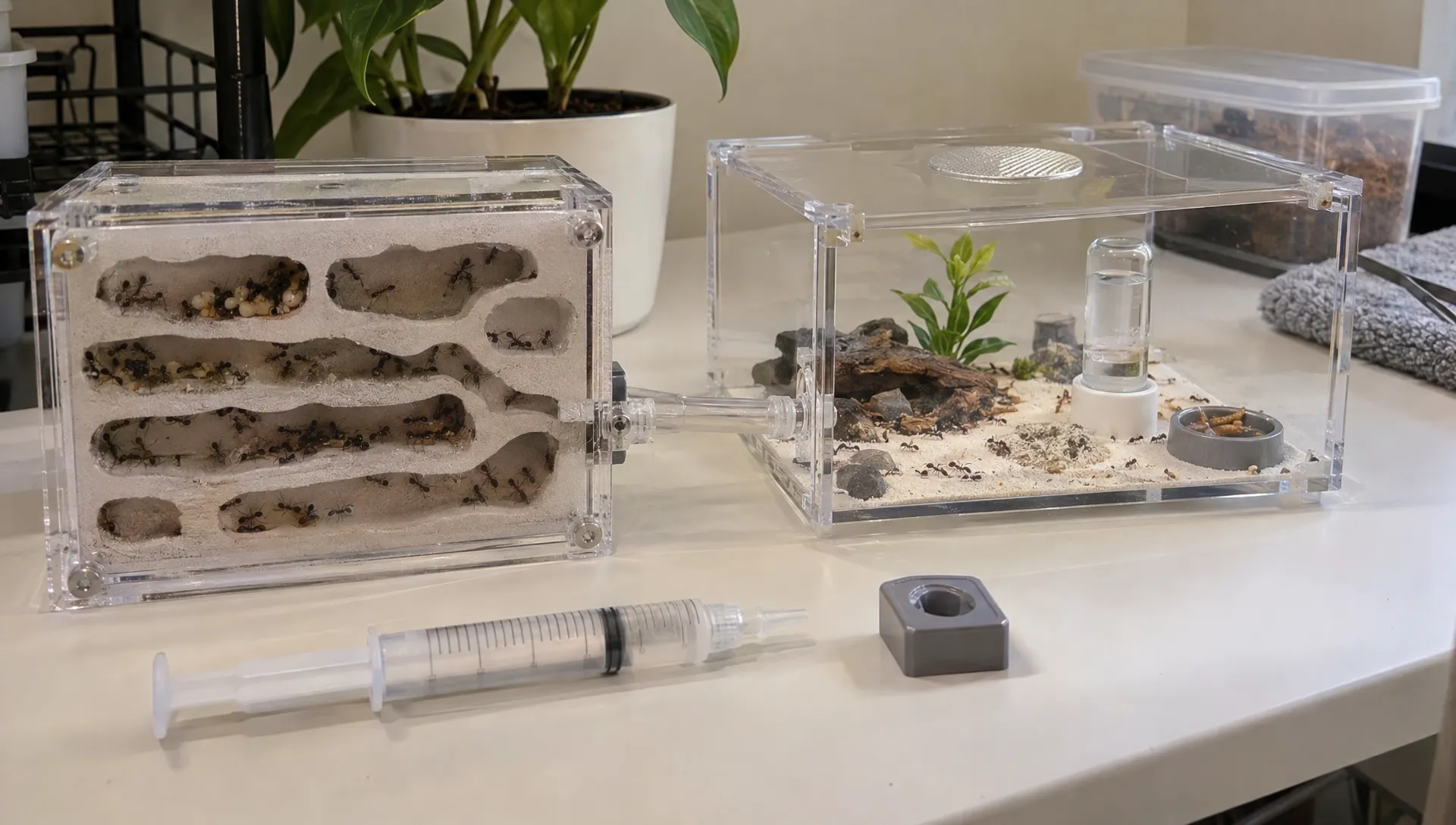
For a small ant farm, measured additions are more useful than a universal daily watering rule. Use a clean syringe, dropper or other suitable tool to put water into the designated hydration point, not onto the ants or brood.
Start with the manufacturer’s recommended amount. If no clear instructions are available, ask the supplier before experimenting with an occupied nest. Give absorbent material time to distribute water before adding more; immediate surface appearance can be misleading.
Record the amount added and how long the hydrated area takes to change. After several observations under similar room conditions, you can establish a working interval. Treat that interval as a reminder to inspect, not an instruction to refill regardless of conditions.
Use plain, clean water. Sugar solutions belong in an appropriate food feeder, not in the nest’s hydration reservoir.
Check conditions consistently
Inspect the habitat daily without opening the nest or repeatedly disturbing its cover. A brief check at roughly the same time makes changes easier to notice.
Keep a simple record of:
- The date and measured amount of water added
- The reservoir level or visible condition of the hydration material
- Any standing water, persistent droplets or damp rubbish
- Changes in room temperature and the colony’s location within the nest
A hygrometer in the outworld measures conditions around its sensor, not necessarily the humidity beside the brood. Inexpensive sensors may also be unreliable near saturation or when wet. Use readings as supporting information rather than chasing a precise percentage without species-specific guidance.
Brood movement can be informative, but it is not a diagnosis by itself. Ants may relocate brood in response to temperature, light or disturbance as well as moisture.
Maintain a separate, safe drinking source
Even when a small ant farm has hydrated nesting material, provide drinking water in a feeder suited to the workers’ size. The design should limit access to open water and reduce the chance of ants becoming trapped.
Check that the feeder dispenses water as intended and does not leak. Avoid an open bowl, which can create a drowning hazard and spill into the habitat.
Clean and refill the drinking source as needed, keeping it separate from sugary foods. A full feeder is only useful if the ants can safely reach the water.
Recognize warning signs before adding more water
One symptom can have several causes. Look at the reservoir, nest material, temperature and colony behaviour together before making an adjustment.
| What you notice | What it may indicate | First response |
|---|---|---|
| Standing water in chambers | Overfilling, a leak or a failed barrier | Stop adding water and identify the source immediately |
| Persistent condensation | A temperature difference, high moisture or limited ventilation | Check placement and hydration before changing the ventilation system |
| A depleted reservoir and drying hydration material | The water supply may need replenishing | Refill through the intended point according to the nest instructions |
| Workers gathering at drinking water | Thirst, normal drinking or another colony need | Verify water access and inspect nest hydration separately |
| Mould around food or rubbish | Damp organic material is supporting growth | Remove accessible waste and review feeding and moisture management |
In a small ant farm, condensation alone is not a reliable refill signal. A cold viewing panel can collect droplets even when the nest does not need additional water, while a warm panel may remain clear above damp material.
Respond carefully to flooding or mould
If water reaches occupied chambers, stop watering and keep the enclosure stable. Do not shake, tip or heat the nest to force it dry. Keep any connected escape-proof, dry refuge accessible if the setup already provides one, and contact your supplier promptly if ants or brood are at risk.
Remove accessible food remains before they deteriorate. Check fresh protein foods daily and remove uneaten portions promptly, sooner if they begin to spoil. Smaller portions reduce the amount of organic material that can remain damp.
Do not apply household disinfectants, fungicides or essential oils inside an occupied habitat. If mould spreads through inaccessible chambers, seek advice about cleaning or relocation rather than abruptly drying out the entire colony.
Adjust for Canadian indoor conditions
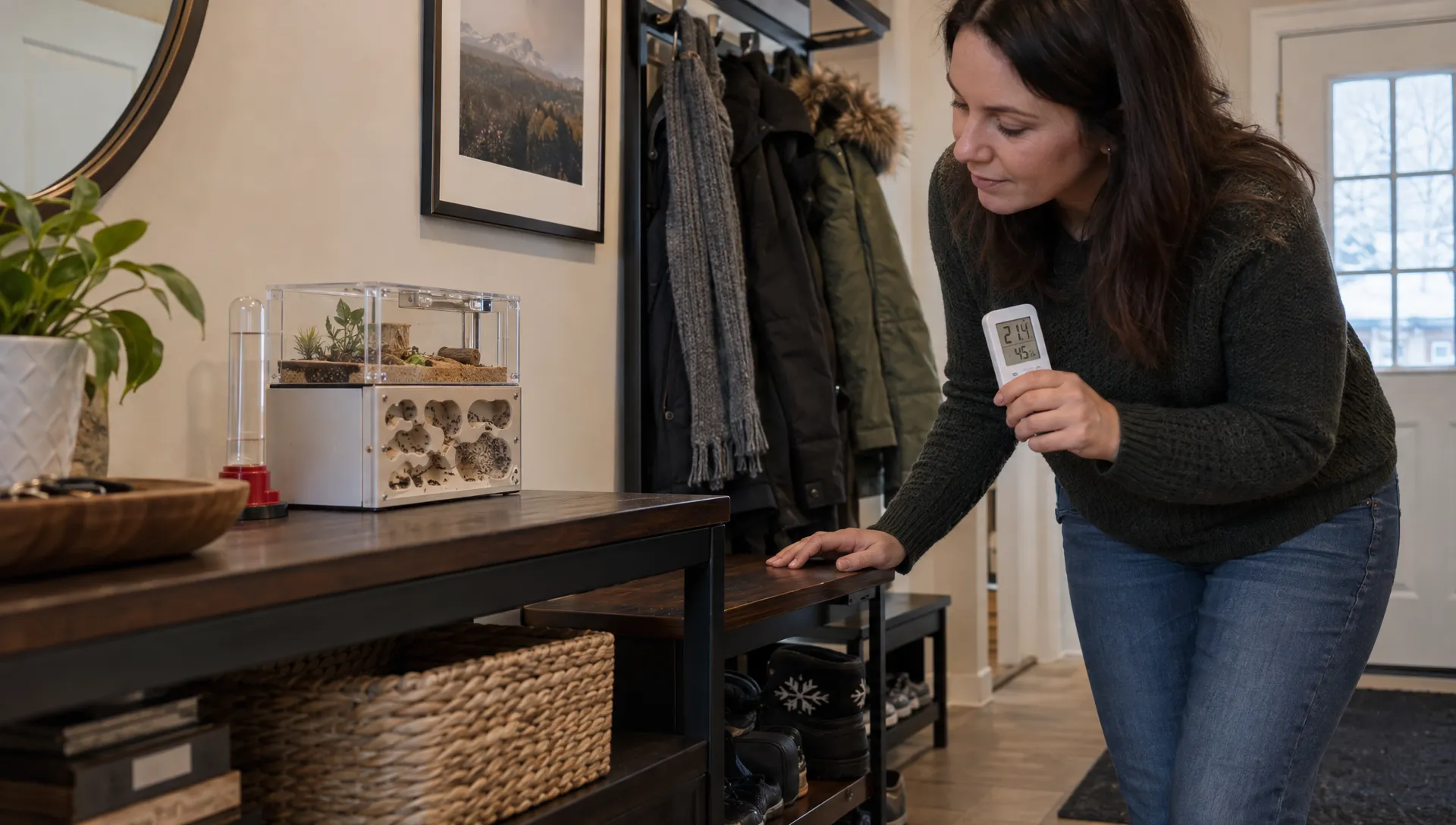
Heated indoor air during a Canadian winter can change how quickly water evaporates. Summer air conditioning, room ventilation and seasonal temperature changes can alter the pattern again. Recheck your usual interval whenever the habitat moves or household heating changes.
Place the enclosure away from direct sunlight, heating vents and cold window glass. Sunlight can overheat a compact habitat, while cold surfaces can encourage condensation. A stable shelf is generally easier to manage than a windowsill.
A small ant farm should not be heated simply to clear droplets from the viewing panel. Any supplemental heat needs to suit the species and nest design, with appropriate temperature control and an area the colony can move away from.
Some species require winter dormancy. Follow their specific temperature and hydration requirements rather than trying to maintain summer activity. Our guide to creating a safe indoor home for ants covers placement and enclosure safety alongside these moisture considerations.
Plan for holidays without overfilling
Before leaving home, establish how long the hydration system and drinking supply normally last under the conditions you expect. Test any new feeder well before departure so you have time to spot leaks or dispensing problems.
If you are browsing Mexico tours for a winter break, put ant care on the same checklist as your travel bookings. A longer absence needs a caregiver or boarding arrangement, not simply more water poured into the nest.
For a small ant farm, leave the caregiver clear instructions showing the correct inlet, normal refill amount and signs that mean they should stop and ask for help. Label nest hydration and drinking water separately. Tell them not to refill a reservoir just because a calendar reminder appears if it is still adequately supplied.
Ant Farms Calgary offers ant boarding while owners travel. Ask about arrangements in advance, particularly if your colony has specific seasonal care needs.
Frequently asked questions
Should I spray the enclosure every day? Not unless your particular species and habitat instructions call for it. Routine misting can wet food and decorations without adequately hydrating the nest. Use the intended hydration system and inspect conditions before adding water.
Can I use tap water? Plain water that is safe for drinking is generally a reasonable starting point, unless your supplier specifies otherwise. Follow any water recommendations for the hydration material or feeder. Do not add sugar, fragrance or cleaning products to hydration water.
How often should I water a small ant farm? There is no reliable universal interval. Nest material, reservoir capacity, room conditions and species requirements all matter. Begin with the manufacturer’s guidance, inspect daily and record how quickly the system uses water.
Should I move a colony when its test-tube reservoir is running low? Prepare a suitable fresh setup before the reservoir runs out and ask your supplier about a low-disturbance transfer method. Do not inject water through the cotton beside an occupied colony, which can cause sudden leakage or flooding.
Choose a setup you can hydrate confidently
Before buying or changing a nest, confirm where water goes, how you can monitor it and whether the occupied space suits your colony. A small ant farm should make routine inspection manageable without requiring frequent disturbance.
The Modular Farm Forest Green Small kit includes gypsum nesting chambers and built-in hydration. Ask Ant Farms Calgary whether it suits your species and colony size, and request watering guidance for that specific setup. Personalized recommendations are more useful than copying a refill schedule from a different nest.




Leave a comment