
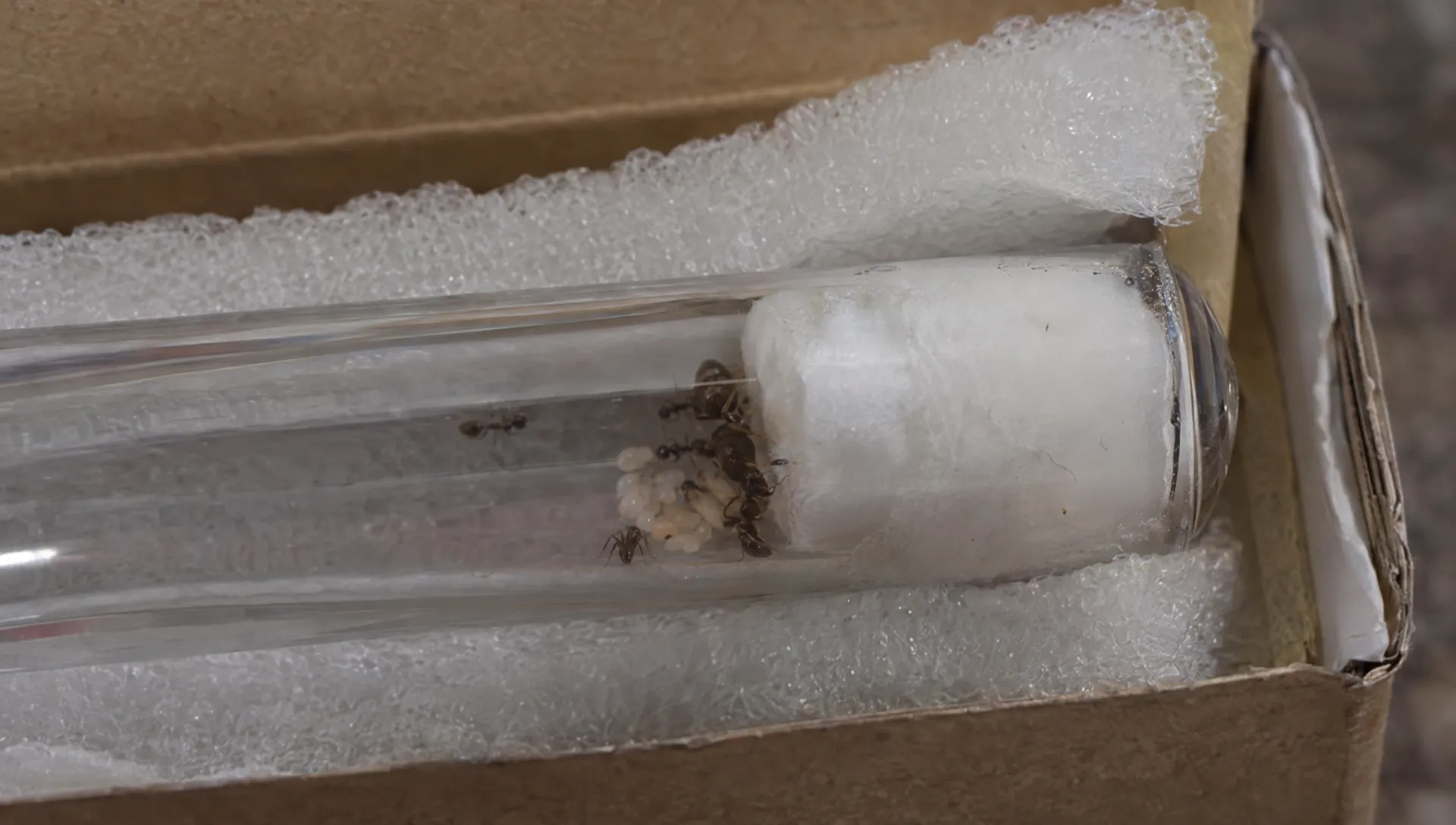
The first check of live ants should be quiet, brief and focused on the shipping container, not on making the colony move. Ants may arrive huddled together or unusually still, especially after a cool journey. Your job is to look for injuries, water problems and differences from the order description, document anything concerning and let the colony settle without unnecessary handling.
Prepare for the handoff before opening the box
Bring the parcel indoors promptly rather than leaving it on a porch, in a community mailbox or inside a vehicle. Canadian winter conditions make a quick handoff particularly useful, but direct sunlight can also overheat a package in otherwise mild weather.
If you already have home security cameras, save the delivery timestamp or relevant footage when a parcel has been left outside. This may help establish its exposure time, although it cannot show the condition of the colony inside.
Prepare a clear table away from windows, heaters, pets and food preparation. Have your phone, order confirmation and a shallow, smooth-sided tray ready. The tray provides a working area, not guaranteed escape prevention.
Read the seller’s arrival instructions and reporting deadline before unpacking. Do not assume a live-arrival policy gives you until the next day to report a problem. If damage is already visible, photograph it immediately rather than waiting until the inspection is complete.
How to inspect live ants without disturbing the colony
Open the outer packaging carefully, keeping scissors and blades away from the transport container. Photograph crushed corners, wet packaging or displaced insulation before removing anything.
Once the ant container is visible, check that its cap, cotton plug or other closure remains secure. Look for cracks and gaps, including around tubing connections if the shipment uses a connected setup. Keep the ants contained while you assess them.
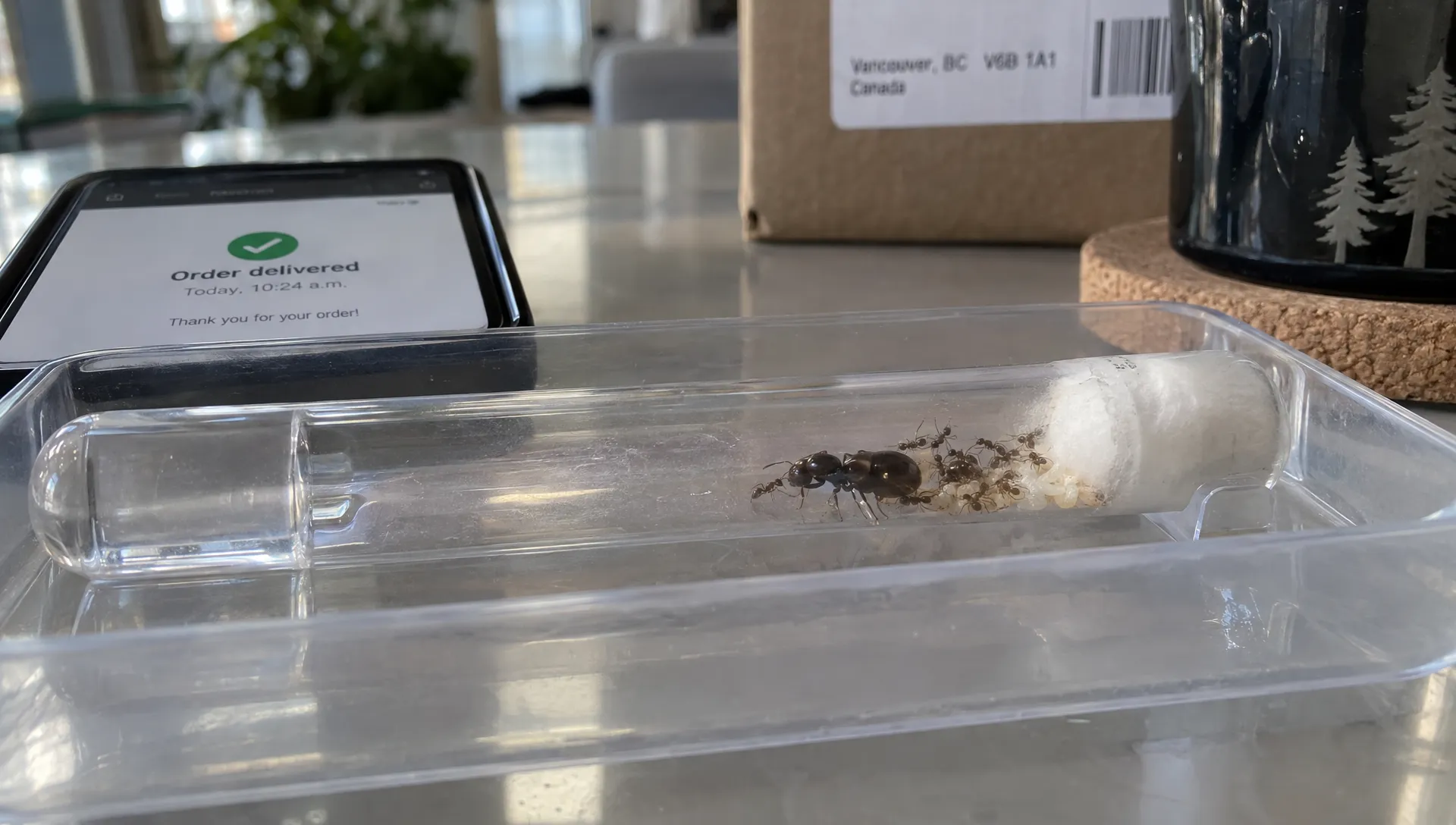
For a standard water-reservoir test tube, a stable horizontal position usually allows inspection without shifting the ants towards the water. Follow any orientation instructions supplied for a different container. Never shake or roll the tube to bring the queen into view.
Use ordinary room light or brief, indirect illumination. A phone’s zoom can help you inspect through the container without moving it closer to your face. Avoid prolonged bright light and repeated repositioning.
Your first inspection of live ants should establish what is visible, not force every individual into view. If workers cover the queen or brood, record that limitation and give the colony some quiet time before another brief look.
Match the queen, workers and brood to your order
Start with the listing and packing label. A queen-only order, a queen with a stated worker range and a worker-only group are different purchases. Do not assume every shipment should contain all three life stages.
In many commonly kept species, a queen has a more substantial middle body section, where her flight muscles developed. Size alone is not a reliable identification method across species, and a queen may be partly hidden beneath workers. If you cannot identify her confidently, send a clear photograph to the seller rather than opening the container.
Check brood without expecting an exact count. Eggs can be tiny and clustered together, larvae often look like pale grubs and pupae may be exposed or enclosed in cocoons, depending on the species. Packaging and worker activity can obscure them.
A queen’s appearance cannot confirm that she is mated or fertile. Being wingless is not proof. Our guide to what to check before ordering an ant queen explains the purchase details worth clarifying with the seller.
When comparing live ants with the listing, document clear discrepancies, such as a missing promised queen or a substantially different visible worker count. An approximate count is more useful than repeatedly disturbing the colony to obtain a perfect one.
Separate shipping stress from warning signs
Movement is useful evidence, but activity level alone does not establish colony health. Species, temperature, season and recent disturbance all affect what you see. In late autumn and winter, some temperate species may also be in diapause, a seasonal period of reduced activity.
| What you notice | What it may mean | Sensible next step |
|---|---|---|
| Ants gathered quietly around the queen or brood | Resting, defensive clustering or reduced activity | Observe briefly without tapping the container |
| Slow walking after a cool journey | Temperature-related sluggishness or another problem | Follow the seller’s temperature guidance and document the condition |
| A worker grooming or adjusting its antennae | Clear evidence that the individual is alive | Record the movement without provoking more activity |
| Several motionless individuals | Possible mortality, although cold can complicate assessment | Photograph them and contact the seller promptly |
| Standing water around ants or a damaged closure | A physical hazard requiring attention | Contain the shipment and seek urgent guidance |
Do not tap, blow into the container or expose it to heat to provoke a response. These tests add stress and do not reliably distinguish a healthy colony from a compromised one.
A video of live ants can capture subtle antenna or leg movement that a still photograph misses. Film through the closed container and describe what you observed, rather than labelling every motionless ant as dead.
Handle a cold or unresponsive colony cautiously
If the shipping container feels unexpectedly cold, avoid sudden warming. Do not place it on a radiator, heating mat or warm appliance, and never use a hair dryer or direct sunlight. Rapid heating can create dangerous temperature changes inside a small container.
For a colony that was not intentionally shipped in diapause, follow the seller’s instructions for gradual adjustment in a stable indoor location. If the colony was shipped dormant, use its specified overwintering conditions rather than automatically bringing it to active-season temperatures.
There is no universal recovery time that proves whether an ant is alive. Temperature exposure, species and the individual’s condition all matter. Record the arrival condition immediately and contact the seller within the stated reporting period, even if you are continuing to observe the colony.
If live ants remain unresponsive, send both an arrival image and a later update with the times noted. Tell the seller whether you changed the container’s surroundings and whether any movement occurred.
Do not delay reporting while waiting for a hoped-for recovery. Equally, do not discard an apparently lifeless queen or colony solely because it did not move during one brief inspection.
Check hydration without opening the container
In a typical test-tube setup, water sits behind a cotton barrier. Look for an intact reservoir and a barrier that has stayed in place. Some containers conceal part of the reservoir, so an unclear view is not proof that the water has run out.
A few droplets on the tube wall are different from standing water surrounding the ants. Look for pooling, ants trapped in water or a cotton barrier that has shifted. Active flooding needs prompt attention rather than a long settling period; contact the seller urgently for safe transfer instructions.
Discoloured cotton alone does not establish that a setup is unsafe. Photograph unusual growth, debris or a leaking reservoir and ask for advice before dismantling it. Opening the container to smell it or cleaning around the colony creates additional risks.
Avoid an unnecessary immediate transfer
Unless the transport setup is unsafe or the seller instructs otherwise, leave the colony in its secure shipping container while it settles. Moving it straight into a large formicarium adds handling and may make a small colony harder to monitor.
A dry reservoir, damaged tube or active flooding may justify intervention, but the safest method depends on the species and container. Ask for specific instructions rather than tipping the ants into a new enclosure.
Do not add water, honey or loose food as an improvised revival treatment. Liquids can trap small ants, and feeding needs differ between founding queens and colonies with workers. Follow the supplied care instructions once the arrival assessment is complete.
Before transferring live ants later, confirm that the enclosure has suitable hydration, secure connections and appropriately sized nesting space. Our checklist for buying an ant farm without missing essential supplies can help you check the receiving setup without rushing the move.
Keep the new colony separate from other colonies and their equipment during this initial assessment. Never combine shipments or release unwanted ants outdoors.
Document concerns and contact the seller promptly
A useful report connects the delivery timeline with clear observations. “The queen has not moved during two brief checks” is more informative than “the colony looks bad”. Include whether workers are moving and whether the container is intact.
Keep your evidence concise:
- The order number, listed species and colony option purchased.
- Delivery and unpacking times, including any known outdoor exposure.
- Photos of the parcel, shipping label and damaged packaging.
- Clear views of the queen, workers, brood and water reservoir where visible.
- A short video showing concerning behaviour or lack of movement.
- Any action taken after arrival, including changes in temperature or container position.
When reporting a problem with live ants, distinguish confirmed observations from estimates. State that the queen is obscured if you cannot see her, and describe a worker count as approximate when individuals overlap.
Retain the packaging and original container until the seller confirms what is needed, provided doing so is safe. Do not assume a refund, replacement or particular mortality allowance applies: those terms depend on the policy attached to your order. Also avoid attempting major changes before asking, unless an immediate physical hazard requires action.
Frequently asked questions
Should I open the tube to check whether the queen is alive? Usually, the first inspection can be completed through the closed container. Opening it creates an escape risk and may disturb the queen and brood. Use a brief visual check, photographs and seller guidance instead.
Does a delivery need to contain workers to be healthy? No. A queen-only order may correctly arrive without workers, while a starter colony should match its stated description. Check what you purchased rather than judging all shipments against the same expected contents.
Are a few dead workers automatically covered by a guarantee? Not necessarily. Sellers define their own reporting requirements and coverage. Photograph the arrival condition and ask how the policy applies to your order rather than assuming that any particular number is acceptable or covered.
Should I feed live ants as soon as they arrive? Follow the species-specific arrival instructions. First check containment, hydration and condition. Do not open a secure setup or add sticky liquids simply to test whether the ants will eat.
Need help with your arrival check?
For an Ant Farms Calgary order, use the available WhatsApp or email support to share your order number, arrival photos and a short description of your concern. Ask about unclear observations before making an avoidable transfer. A calm inspection and a clear record give the support team useful information while keeping disturbance to the colony low.




Leave a comment