A large ant farm for adults can fit into a small flat or home office if “large” means useful colony space, not an oversized box. The key is to plan the nest, foraging arena and maintenance access together, then expand only when the colony needs it.
Before buying, decide where the setup will live throughout the year, including any species-specific winter rest. A display that fits a shelf but leaves no room to open the lid, refill water or retrieve food is not a workable setup.
Measure the working footprint first
Measure the available width, depth and height with the shelf or desk already in use. Include nearby objects that could interfere with feeding or inspection, such as a monitor arm, cupboard door or curtain.
| Measurement | What to include |
|---|---|
| Width | Habitat, connectors and tubing bends |
| Depth | Habitat, protective tray and access to front-facing ports |
| Height | Nest or arena plus room to remove the lid |
| Service space | Somewhere to place feeding tools and a removed lid |
| Support | Shelf load rating, stability and any manufacturer-required anchoring |
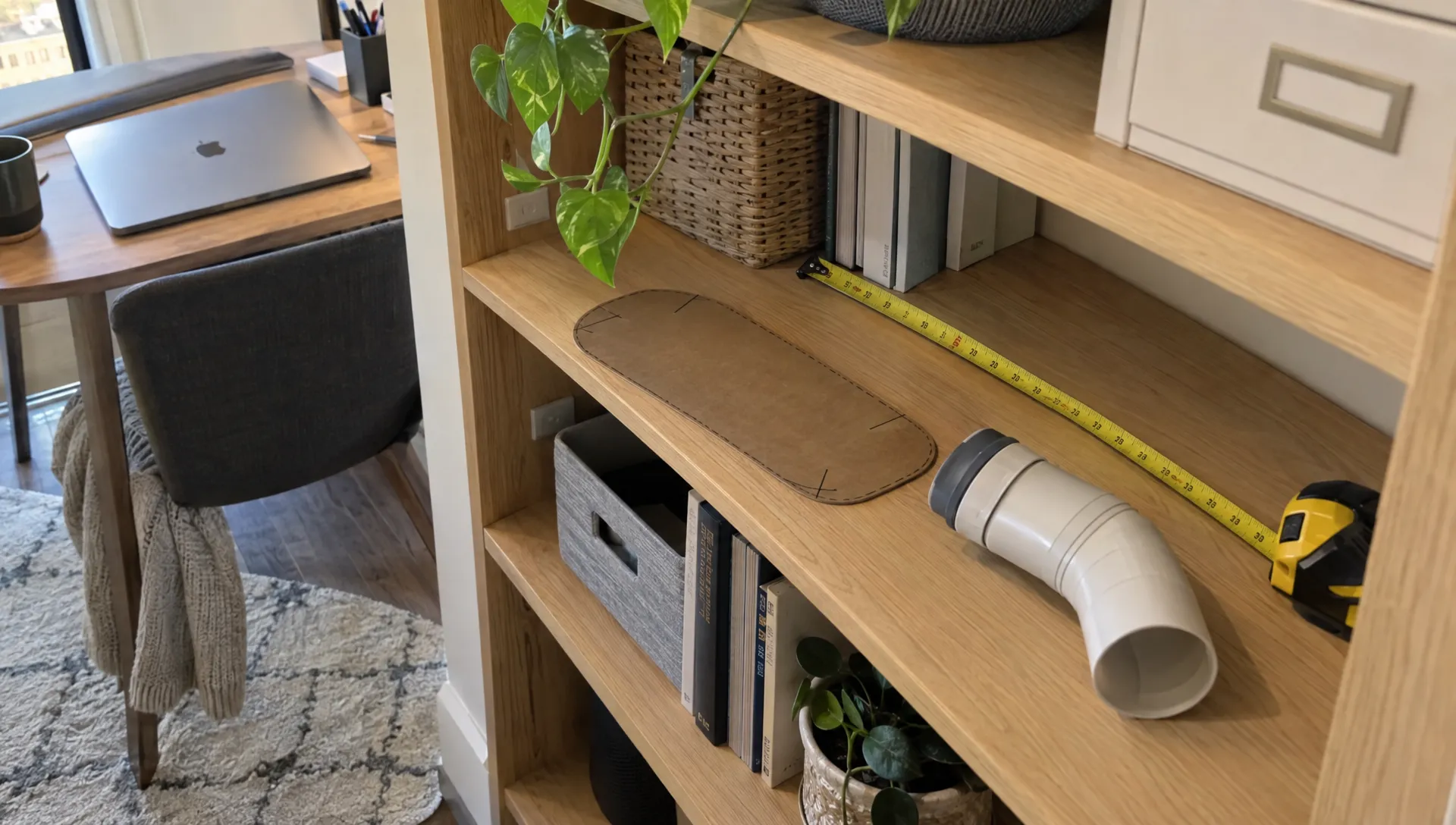
Make a cardboard template of the proposed footprint before ordering. Place it in the intended spot and rehearse opening, feeding and refilling. This reveals awkward clearances more reliably than looking at product photographs.
Choose a large ant farm for adults by usable space
Size labels such as XL and 5XL are not standard measurements across manufacturers. Compare external dimensions with the space ants can actually occupy. A tall enclosure may contain substantial nesting space, while a wide display may devote most of its footprint to the arena.
The nest and foraging arena do different jobs. Nesting chambers house the queen, workers and brood. The arena, also called an outworld, provides space for feeding, exploration and waste removal. Extra arena space does not automatically mean the colony needs extra nesting chambers.
Ask about chamber depth as well as total area. Worker size, queen size and nesting behaviour affect suitability. Narrow passages that suit one species may not suit another, and advertised ant capacities are estimates rather than universal stocking limits.
Materials matter too. Acrylic offers clear viewing, while gypsum and clay-based components can help manage nest moisture. Their suitability depends on the design, species and hydration method, not simply which material looks most attractive.
When comparing a large ant farm for adults, ask for usable nest dimensions, arena dimensions and the clearance needed to service both. Those measurements are more useful than a size label alone.
Match the first nest to the colony you have
A small founding colony usually does not need immediate access to an enormous nest. Excess chambers can become places to leave food or rubbish, making cleanliness and moisture harder to manage. Some colonies also settle more readily in a smaller, sheltered space.
Plan the final display now, but open living space gradually. Depending on the equipment and species, that might mean starting in a suitable test-tube setup, using manufacturer-designed partitions or connecting a small nest to a larger arena. Do not improvise plugs that ants could dislodge or chew through.
There is no reliable worker-count threshold that applies to every species. Expansion decisions should consider occupied chambers, brood, crowding and the supplier’s guidance. A colony using most of its suitable nest space presents a different situation from one merely gathering around food.
For example, the Modular Farm 3XV kit uses five-level nesting chambers. That makes vertical dimensions worth comparing, but it does not establish that the whole nest should be opened to a young colony immediately.
Treat a large ant farm for adults as a long-term housing plan, not a requirement to fill every chamber on arrival. Keep future connection points accessible so expansion does not require moving an occupied habitat.
Give the habitat a stable, separate zone
Choose a location away from direct sunlight, radiators, cooking heat and laptop exhaust. A small enclosure can experience changing conditions even when the room feels comfortable. Check conditions at the intended shelf rather than assuming the whole room stays the same.
Avoid positioning the farm above electronics or somewhere a refill spill could damage belongings below. A shallow protective tray can catch minor spills, but it must not obstruct ventilation or make the habitat unstable. Keep the setup out of reach of children and pets where relevant.
A shared desk also needs predictable boundaries. Leave feeding tools away from stationery, food and drinks, and route tubing where chairs, drawers and cleaning equipment cannot snag it. An escape barrier is not a substitute for secure lids, suitable ventilation mesh and properly fitted connections.
If you are reorganizing the computer side too, a specialist such as Levix can advise on laptops and peripherals. Settle their positions before assigning the remaining desk space to the habitat, especially around ventilation outlets and charging leads.
The safest location for a large ant farm for adults is one you can service without shifting it every time. If routine feeding requires lifting the enclosure or pulling it towards a shelf edge, revise the layout.
Test a compact layout before committing
Consider this hypothetical planning exercise, not a product specification: you have a clear shelf measuring 60 cm wide by 40 cm deep, with 45 cm of vertical clearance. You are considering a habitat measuring 30 × 20 × 20 cm on a 40 × 30 cm tray.
On paper, the tray leaves 20 cm of shelf width and 10 cm of depth unoccupied. The habitat also has 25 cm above it. Those figures look promising, but they do not prove the setup works. A side connector, curved tube or lid that lifts at an angle could consume that allowance.
Place templates for the tray, habitat and planned expansion module on the shelf. Then check whether you can reach the refill point and retrieve a feeding dish without disturbing anything else. Do not assume that unused space behind the enclosure is accessible working space.
For an expandable option such as the Modular Farm 5XL Max kit, confirm the assembled dimensions and connection layout before deciding how much shelf space to reserve. Leave room for maintenance first and decorations second.
Design maintenance into the display
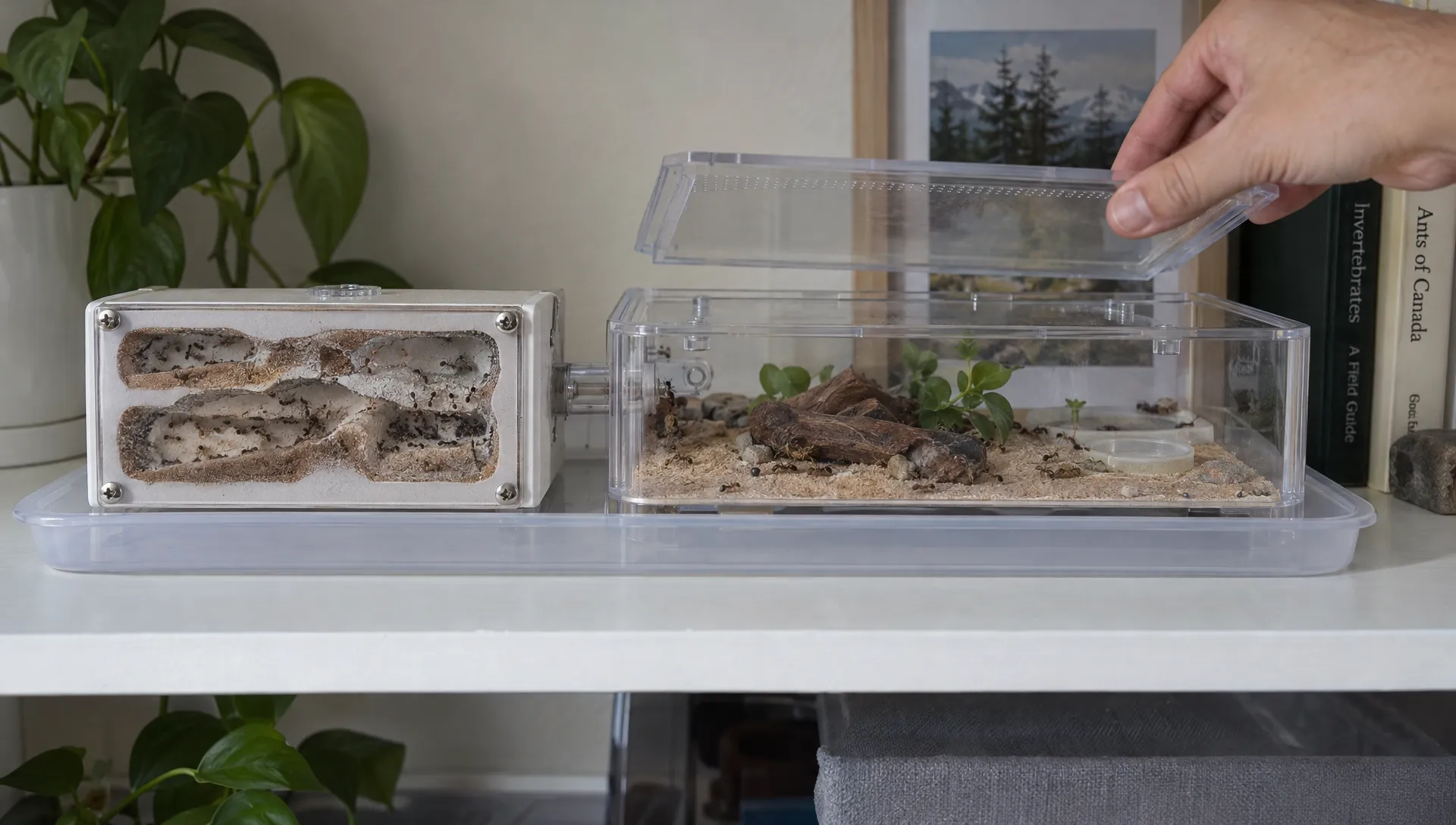
A compact farm should let you remove leftovers, check drinking water and inspect connections without dismantling the display. Keep feeding dishes reachable near the arena opening. Decorations should not hide waste, block access or create bridges across an escape barrier.
Hydration needs two separate checks: suitable nest moisture and an appropriate drinking-water supply. Depending on the design, a nest reservoir may not provide accessible drinking water. Follow the habitat instructions and species-specific advice rather than assuming one refill point covers both needs.
Before choosing a species, ask for its scientific name, expected growth, adult worker size, temperature needs and any diapause requirement. Diapause is a seasonal reduction in activity that some temperate species require. If a cooler winter location is needed, plan that location before buying the colony.
A simple care record can track refills, feeding, temperature observations and changes in colony activity. It is particularly useful when indoor heating changes the room’s conditions. Do not add heat without understanding the species’ needs and the equipment’s safe operating instructions.
A large ant farm for adults should remain manageable during a busy working week. If reaching a water port or cleaning the arena feels awkward during your cardboard trial, it will be harder with live ants inside.
Budget for the complete setup and delivery
Compare the total setup cost, not just the enclosure price. Check whether the quoted kit includes a colony, suitable food, drinking-water equipment, connection tubing and any required escape-prevention supplies. A kit photograph does not necessarily show everything included in the purchase.
Your budget should account for:
- The habitat and any initial partitions or connection accessories
- A suitable live colony, if sold separately
- Feeding supplies, water equipment and replacement consumables
- A tray or stable support if needed
- Shipping, applicable taxes and any weather-related packing charges
Check the displayed currency before comparing Canadian and international listings. Ask about dispatch timing, expected transit time and weather-related delays, especially for a Canadian winter delivery. Arrange to receive the parcel promptly rather than leaving it outdoors or in a communal mail area.
Request the live-arrival policy before payment. Confirm which shipments qualify, the reporting deadline, required photographs and whether the remedy is a replacement, credit or refund. Do not assume equipment and live colonies have identical delivery terms.
Ant Farms Calgary offers shipping across Canada and to the USA, but confirm live-colony eligibility for your destination separately from equipment shipping. For imports into Canada, use the Canadian Food Inspection Agency’s Automated Import Reference System as a starting point and confirm applicable species-specific requirements with the relevant authorities.
Budgeting for a large ant farm for adults also means allowing for future expansion without buying every module immediately. Choose a legal, appropriate species and never release captive ants outdoors.
Frequently asked questions
What is the largest ant farm that makes sense in a small home? The practical maximum is the largest setup you can support securely, maintain comfortably and expand without blocking access. Compare usable nesting space and arena dimensions rather than searching for the biggest size label.
How long will ants live in an ant farm? Individual worker lifespans vary by species and conditions. A healthy queenright colony can persist for years as new workers replace older ones, but that is different from keeping a temporary group of workers without a queen.
Can I buy an ant farm with live ants included? Yes, some starter packages include a colony, while other kits contain equipment only. Check the listing, queen status, scientific name and destination eligibility before ordering. The habitat should be ready before the ants arrive.
How much does a large ant farm for adults cost? There is no single price because enclosure size, materials, included supplies and colony choice vary. Request an itemized total that includes shipping and taxes, then distinguish essential startup purchases from modules you can add later.
Get a kit recommendation that fits your space
Send Ant Farms Calgary your available shelf dimensions, intended location and current colony details, or explain that you are starting from scratch. Ask for a recommendation that matches both the ants’ needs and your maintenance access, with a clear expansion plan rather than the largest enclosure available.




Leave a comment