
A search for “order ant queen” can turn up an appealing photo and a checkout button, but neither tells you whether the queen suits your home, can legally travel to your address or is ready to establish a colony. Before paying, confirm the species, founding stage, care requirements and live-arrival terms.
For Canadian buyers, the most useful checks happen before dispatch. Once a queen is in transit, it is much harder to correct an unsuitable species choice, a missing care plan or a delivery arrangement that leaves live ants outside in cold weather.
Check Legality for Your Exact Destination
A seller accepting your postal code does not establish that a shipment is permitted. Requirements can depend on the species, its origin, the destination and whether the parcel crosses an international border.
For an import into Canada, start with the Canadian Food Inspection Agency to determine the applicable requirements for the particular ant species and its origin. Confirm any additional federal, provincial or territorial restrictions with the relevant authorities. Obtain any required authorisation before shipment, not after the parcel reaches the border.
Domestic purchases also deserve a destination-specific check. A species occurring somewhere in Canada is not necessarily native to your area, and a seller’s general shipping policy may not cover every species or route.
Ask where the queen will actually ship from. A Canadian-dollar price or Canadian-facing website does not necessarily mean the animal is already in Canada. Never plan to release purchased ants outdoors, including species described as native.
What an “order ant queen” Listing Should Confirm
A clear identity and an accurate description
Look for a scientific name rather than relying on descriptions such as “large black queen.” Different ants can look similar while needing different founding conditions, feeding routines and seasonal care.
Ask whether the photograph shows the actual queen or is a representative image. If identification is provisional, the seller should say so and explain what care guidance remains reliable. Uncertainty matters more when it could change whether the queen needs food, host workers or a particular seasonal routine.
Confirm exactly what is included: one queen, multiple queens, brood or workers. Ask for approximate worker numbers and brood stages, along with the date of the latest observation. Eggs, larvae and pupae are not interchangeable descriptions of colony progress.
Evidence of mating and successful founding
Missing wings do not prove that a queen has mated, and eggs alone do not prove she will produce workers. An unmated queen can lay unfertilised eggs that develop into males in many ant species.
Ask what supports the seller’s description of the queen as mated. Workers produced by that queen provide stronger evidence of successful founding than appearance alone. Workers placed with a queen are a different situation, so clarify whether they are her offspring.
No responsible seller can guarantee unlimited future egg production. You want an accurate account of what has been observed, not an absolute promise about future colony growth.
Choose Between a Queen Alone and a Starter Colony
Before you order an ant queen, decide how much founding-stage uncertainty you are comfortable managing. A queen alone may cost less upfront, but a queen with her first workers has already passed an important developmental stage.
| Listing stage | What it tells you | What still needs checking |
|---|---|---|
| Queen alone | No workers are included | Mating evidence, founding method and feeding needs |
| Queen with eggs or larvae | Brood has been observed | Whether brood is progressing and what care is required |
| Queen with pupae | Some brood has reached a later stage | Whether the pupae are her offspring and how they are developing |
| Queen with workers | Workers are present | Whether the queen produced them, their approximate number and current feeding needs |
A starter colony is not automatically easy. Species behaviour, escape prevention and care conditions still matter. However, seeing workers forage can make feeding and colony activity easier for a beginner to interpret.
Ask whether the species founds independently. Socially parasitic queens and species with specialised founding requirements are not interchangeable with independently founding beginner options. An attractive queen is not a good purchase if her requirements exceed what you can provide.
Match the Species to Your Home and Schedule
A species being available locally does not mean your indoor conditions will suit it. Ask about the temperature and moisture conditions required at the current stage, rather than requesting one generic “ideal temperature.” Measure the intended location instead of relying only on the household thermostat.
Founding method also changes the workload. Many fully claustral queens normally establish their first workers using stored reserves. Semi-claustral queens generally need access to food during founding. Follow species-specific advice rather than assuming that every queen should be fed immediately or left entirely alone.
Before you order an ant queen, also confirm her seasonal status. Some temperate species require diapause, a period of reduced activity associated with their annual cycle. Ask whether the queen or colony has already entered it, what conditions it has experienced and how the seller recommends continuing that routine.
This is especially relevant to Canadian autumn and winter purchases. Do not warm a dormant colony simply because you want to see more activity. Choose a species whose feeding, monitoring and seasonal needs fit your actual schedule.
Get the Shipping Plan and Arrival Terms in Writing
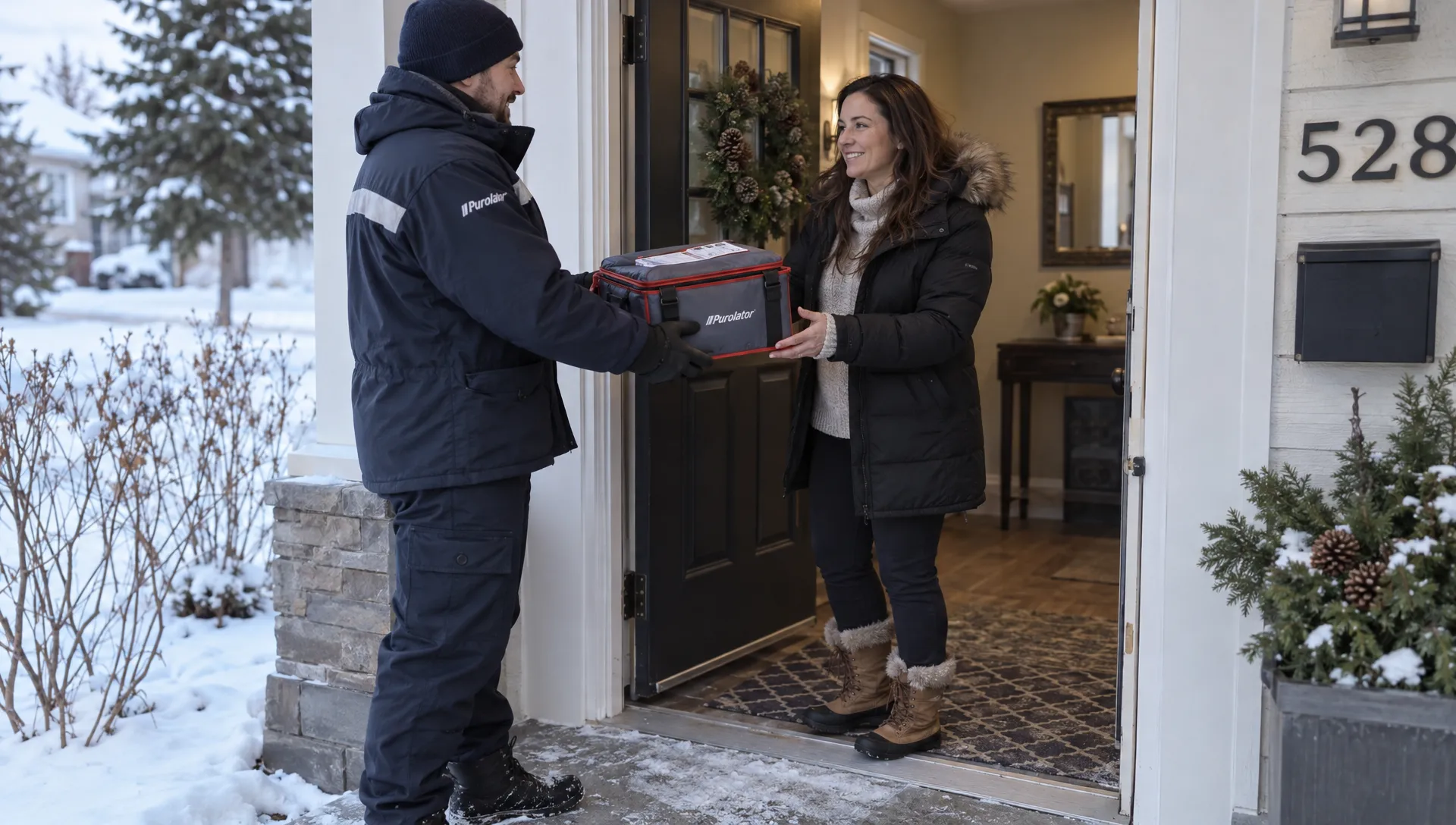
“Ships to Canada” is not enough detail for a live-animal order. Confirm that the seller serves your specific destination, that the carrier accepts the shipment and that the selected service is appropriate for current conditions.
Before you order an ant queen during a cold spell or heat event, ask whether dispatch should be postponed. Packaging cannot make every route safe. A shorter journey can still expose a parcel to unsuitable temperatures at a depot, loading area or doorstep.
Get clear answers about dispatch timing, tracking, delivery arrangements and what happens if a shipment is delayed. Arrange for someone to receive the parcel promptly, and ask whether a collection option is available and suitable.
A live-arrival guarantee is only useful when you understand its conditions. Check the reporting deadline, required evidence and available remedy. Establish whether coverage applies to the queen, workers and brood, and whether replacement shipping costs are included or separate. Do not assume a refund and a replacement are interchangeable.
Read any weather, delay or unattended-delivery exclusions before checkout. Save the policy that applies to your order, since a short promotional statement may not contain all the conditions.
Prepare the Arrival Setup, Not a Large Display Nest
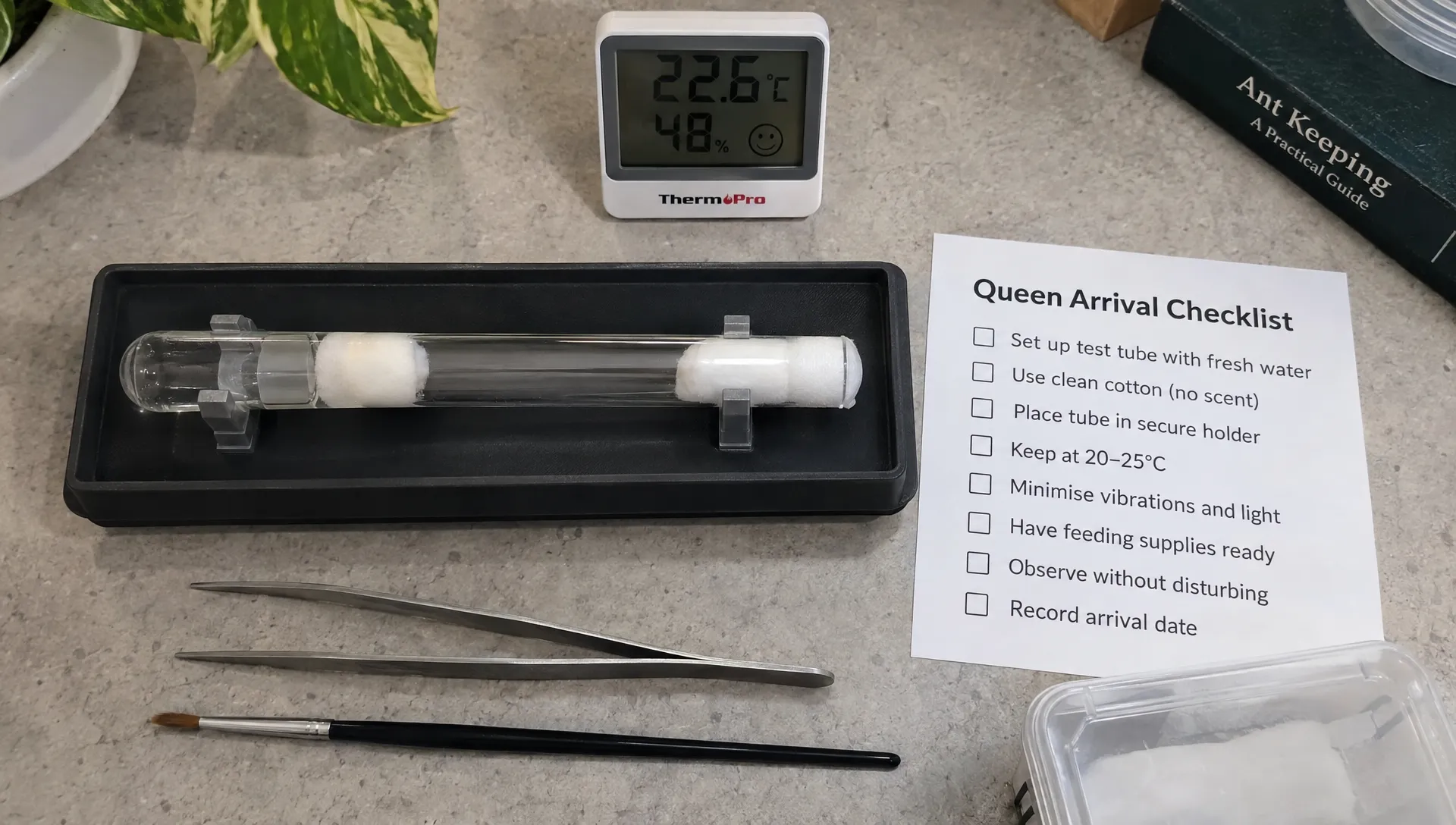
The right first setup depends on the queen’s stage, not the size of the enclosure you hope to own eventually. A founding queen may need to remain in an appropriate test-tube nest rather than move immediately into a formicarium.
Confirm what container she arrives in, whether it has a water reservoir and how the seller recommends managing arrival. Have a secure place ready, away from direct sunlight, vibration and household disturbance. If feeding is necessary, prepare an appropriate escape-resistant feeding arrangement before delivery.
You should also know what would justify intervention, such as a leaking reservoir or an insecure closure, and whom to contact before attempting a transfer. Our guide to preparing ant tubes for founding queens covers setup details once you know the species and founding method.
Avoid buying a large nest simply to make the order feel complete. Equipment should match the colony’s current needs and allow appropriate moisture management and observation.
Verify the Seller’s Support and Checkout
Before you order an ant queen, ask one practical care question specific to the listing. For example: “Does this queen need feeding before her first workers, and what should I do if she arrives during diapause?” The answer should address that queen’s situation rather than repeat a generic care sheet.
Look for clear contact details, consistent listing information and a willingness to explain uncertainty. Our guide to choosing an ant shop with reliable care support provides a broader framework for assessing ongoing help.
Keep payment security separate from livestock expertise. Use a payment method with suitable dispute protections and retain your invoice. For organisations purchasing classroom colonies through shared accounts, purchasing security may also involve an IT provider. AITEC’s managed IT and cybersecurity services illustrate that separate business-support role; technical security does not verify an ant seller’s identification, husbandry or shipping claims.
A polished checkout is useful, but the deciding evidence should still be the animal’s documented condition, a workable delivery plan and clear aftercare.
Save These Details Before Paying
Keep a short purchase record so you are not trying to reconstruct the agreement after delivery. It should include:
- Animal details: Scientific name, identification uncertainty, queen count, worker count and observed brood stages.
- Founding status: Evidence supporting mating, whether workers are offspring and any specialised founding requirements.
- Care instructions: Feeding needs, arrival setup, seasonal status and conditions to maintain.
- Delivery agreement: Dispatch location, service, weather decision and arrangements for receiving the parcel.
- Arrival coverage: Reporting deadline, evidence required, remedy and any additional costs.
If an essential answer is missing, pause the purchase. It is better to order an ant queen later than receive an animal whose legal status, care needs or delivery conditions remain unresolved.
Frequently Asked Questions
Is a queen with workers always better for a beginner? It often reduces uncertainty about successful founding, particularly when the workers are her offspring. However, species-specific care still matters. A demanding species does not become beginner-friendly simply because workers are included.
Can I order a queen from another country and have it shipped to Canada? Only proceed once you have confirmed the requirements for the exact species, origin and destination, including any necessary authorisation. A seller offering international checkout is not proof that importation is permitted.
Does a queen without wings definitely count as mated? No. Wing loss alone is not reliable proof. Ask what evidence supports the seller’s claim and whether she has produced workers.
Should I feed the queen as soon as she arrives? That depends on her species, founding method and colony stage. Obtain instructions before dispatch. Do not apply fully claustral founding advice to a semi-claustral queen or a colony already supporting workers.
Should I transfer her into a formicarium immediately? Not automatically. If the shipping tube remains suitable, a transfer may be unnecessary. Follow stage-appropriate guidance and contact the seller if the container is damaged, leaking or otherwise unsafe.
Choose the Queen First, Then Match the Equipment
Ready to compare options? Browse Ant Farms Calgary’s live queens and starter colonies, then confirm the details of the particular listing before paying. Ask about current availability, destination eligibility and the setup appropriate to that queen’s stage.
The right purchase is one you can receive safely and care for confidently, with clear information about the animal and reliable help when questions arise.




Leave a comment