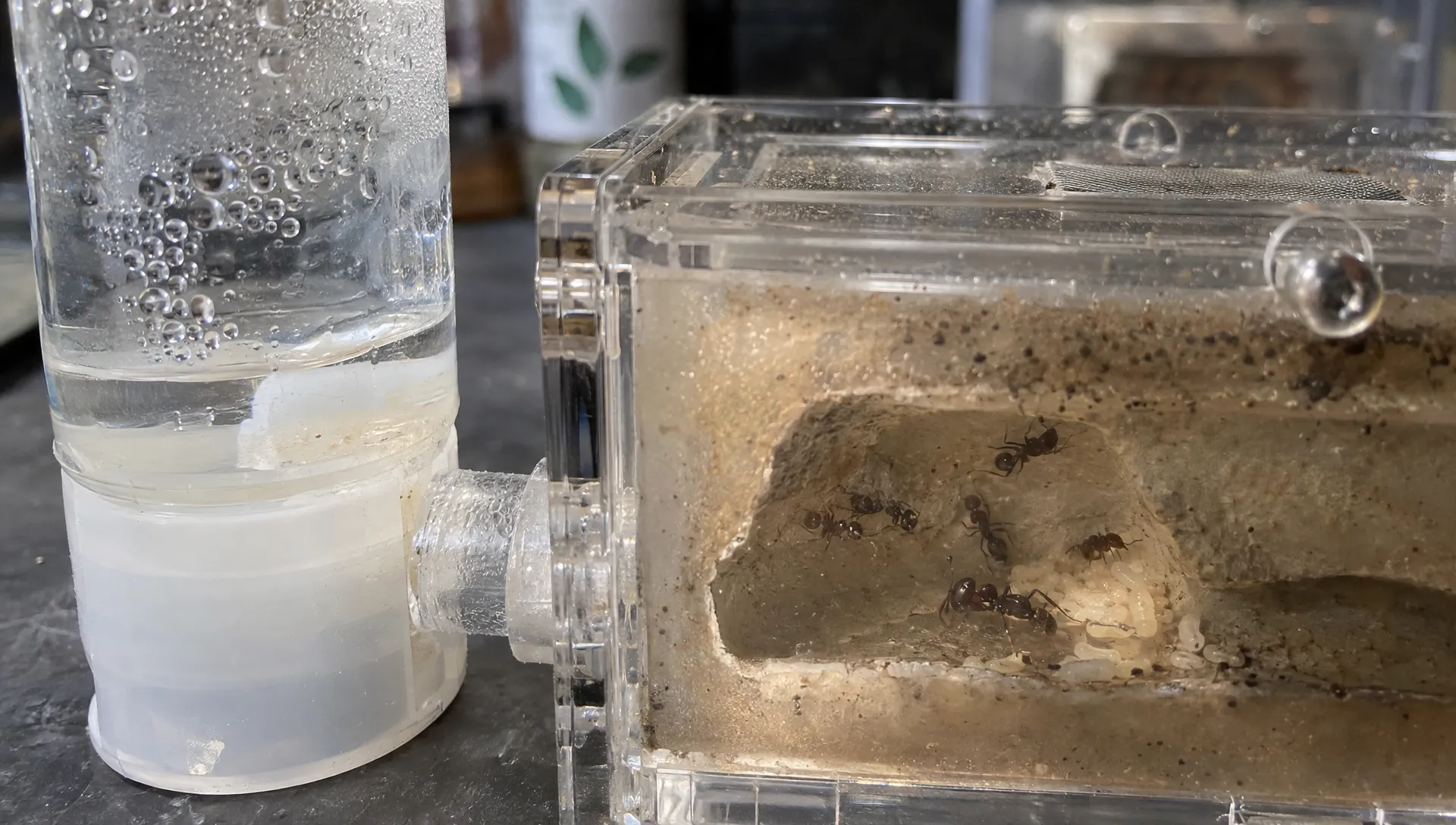
Searching for an “ant shop near me” can help you find a seller, but distance alone will not tell you whether that seller can help you keep a colony healthy. The more useful question is what happens after you bring the ants home. Can someone explain the species’ needs, troubleshoot a hydration problem and tell you when an expansion is actually necessary?
Before comparing prices, compare the quality of the answers. A reliable shop should help you choose an appropriate colony and setup, then make its support process clear before you pay.
Confirm what the shop actually sells
Some shops sell live queens and colonies. Others sell only formicariums, feeding supplies or decorative ant habitats. A listing for an “ant farm” does not necessarily include ants, and a photograph of a populated nest is not proof that a colony comes with it.
Check the individual product description for the colony, habitat and accessories included. For live ants, look for a scientific species name and a clear description of the colony’s current stage, such as a queen alone or a queen with workers.
When comparing an “ant shop near me” result with an online specialist, establish that both are offering equivalent purchases. A habitat-only price cannot be compared directly with a starter kit that includes a colony and essential supplies.
Ant Farms Calgary’s live ant listings are a useful place to distinguish colony purchases from equipment purchases. Confirm current availability and what is included in the specific option you choose.
Ask about identification and colony history
A dependable seller should be able to explain what it is selling without relying on labels such as “easy ants” or “large black ants.” Species identification matters because feeding, containment, temperature requirements and seasonal behaviour differ.
Ask when the colony was established, whether workers are present and what the seller has observed about feeding and development. If a worker count is approximate, that should be stated rather than presented as an exact inventory.
For species that undergo diapause, a seasonal period of reduced activity, ask how that affects your purchase timing and first months of care. Reduced winter activity should not automatically be treated as a problem requiring extra heat.
Good advice connects the colony’s current stage to your experience and available space. Be cautious if the recommendation is simply the largest colony or most expensive habitat, without questions about your circumstances.
What an “ant shop near me” should offer after the sale
“Support included” is useful only when you know what it means. Before buying, establish the contact channel, expected response window and information the seller needs to assess a problem. Do not assume that an active social account means urgent messages are monitored continuously.
Use practical questions to assess the depth of the advice:
| Ask the shop | A useful answer should explain |
|---|---|
| How will I know when to refill the water supply? | What to observe in the supplied setup and how to refill it safely |
| What should I do if the colony stops eating? | Which observations matter, including season, colony stage and recent changes |
| When should I expand the nest? | Colony-specific signs of readiness rather than a fixed sales schedule |
| What happens if the nest develops mould? | What information or photographs to send and which immediate precautions are appropriate |
| Can you help with an escape risk? | How to assess connections, openings and containment for the species |
Look for a seller who asks follow-up questions rather than diagnosing every issue from one photograph. Equally, a responsible shop should acknowledge when the available information is insufficient.
Send one realistic question before buying
A short pre-purchase enquiry can reveal more than a broad promise of expert advice. For example:
I’m a first-time keeper with space for a small setup. Which available colony would you recommend, what seasonal care does it need and how should I contact you if something changes after arrival?
You are testing relevance, not demanding an instant reply. Does the answer address your circumstances? Does it explain the recommendation? Does it identify anything you should prepare before collection or delivery?
An “ant shop near me” earns a place on your shortlist when its answers make the responsibilities clearer, not when it promises that ant keeping requires no maintenance.
Check equipment fit and the full setup cost
Reliable care support starts with equipment that suits the colony. Ask why the recommended nest size, hydration system and outworld are appropriate now, rather than only when the colony becomes larger.
For modular setups, confirm connection sizes, compatible extensions and the availability of replacement components. “Expandable” is less useful if you cannot identify which parts connect or how to isolate an unused section.
The same purchasing discipline applies to other fitted household products: this guide to choosing stores that sell closet organizers highlights checking dimensions, construction and return policies. For ant equipment, those checks also affect containment and access for maintenance.
When reviewing an “ant shop near me,” ask for the total cost of the recommended starting setup, including any necessary feeders, food and containment supplies. Distinguish essentials from optional decorations.
Our guide to what makes a safe indoor home for ants provides background for evaluating a proposed habitat. Use it to ask better equipment questions, rather than treating appearance as evidence of suitability.
Compare local pickup with shipping
Local pickup can let you clarify instructions and avoid part of the delivery process. However, confirm the pickup location, collection arrangements and availability directly with the shop. A search listing may not reflect current arrangements, and a local business may operate by appointment rather than as a walk-in storefront.
Before collection, ask how to transport the colony safely and how soon you should take it home. Do not plan extra stops that could leave live ants exposed to unsuitable temperatures in a parked vehicle.
Shipping requires a different set of questions. Ask how the seller evaluates forecast temperatures, whether dispatch can be delayed and what happens if delivery is interrupted. Both the origin and destination conditions matter, along with possible conditions during transit.
A more distant specialist may offer better support than an “ant shop near me,” but that does not make every shipping window suitable. A seller willing to postpone a live shipment when conditions are unsuitable is showing better judgement than one promising dispatch regardless of the weather.
Read live-arrival and equipment policies separately
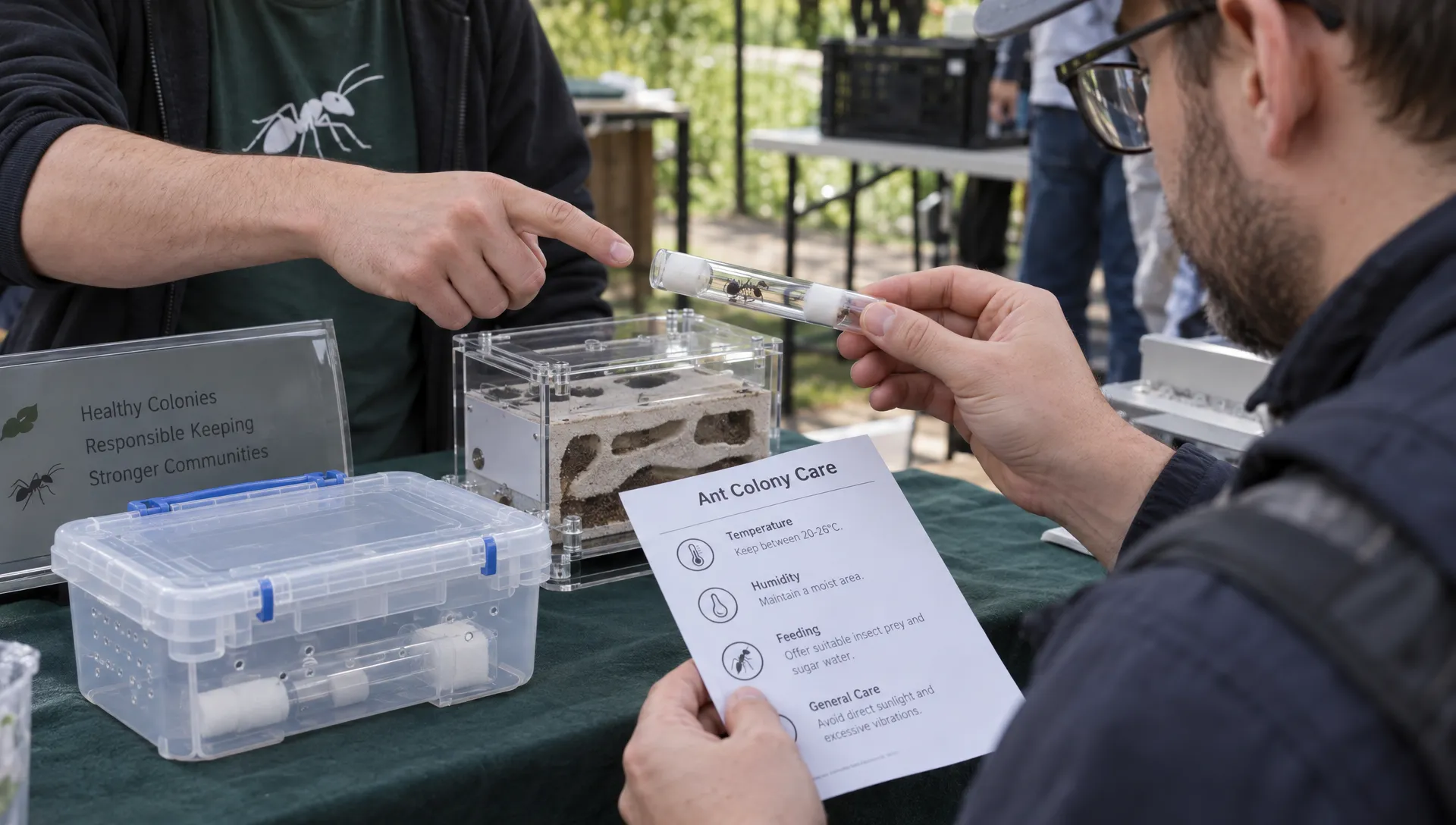
Live ants and unused equipment may have different policies. Before paying, find out what protection applies to each part of your order and keep a copy of the terms supplied at purchase.
For live arrivals, ask what condition is covered, how quickly a concern must be reported and what evidence is required. Also establish whether the remedy is a replacement, store credit or refund, and whether delivery charges are included. These are questions to verify, not benefits to assume.
When evaluating an “ant shop near me,” look for policies that tell you what to do, not just a reassuring guarantee badge. Local pickup does not eliminate the need to understand what happens if a problem becomes apparent once you get home.
For equipment, check how the seller handles missing parts, leaks, damaged connections and defects. Ask whether customer modifications affect the available remedy before drilling, gluing or otherwise altering a new habitat.
Verify that the species can legally reach your location
A shop’s ability to accept an order is not proof that every species can legally be sent to every destination. Ask for the scientific name, where the colony will be dispatched from and whether restrictions or permits apply to that movement.
For Canadian import questions, start with the Canadian Food Inspection Agency and seek guidance for the particular species and origin. For shipments entering the United States, consult USDA APHIS and check applicable state requirements. Provincial, territorial or other local rules may also be relevant.
Do not treat a seller’s general statement that it ships to Canada or the USA as species-specific approval. A careful retailer should be willing to discuss destination restrictions and decline an unsuitable order.
Also ask what to do if you can no longer keep the colony. Never release captive ants outdoors. Arrange a lawful, contained solution rather than assuming a locally familiar-looking species is safe to release.
Use a short buying checklist
Before choosing an “ant shop near me,” make sure you can answer these four questions:
- What am I buying? You know the species, colony stage and exact equipment included.
- Why does it suit me? The recommendation reflects your experience, space and ability to provide seasonal care.
- Who will help afterwards? You have a working contact channel and understand the support process.
- What happens if something goes wrong? Arrival terms, equipment policies and reporting requirements are clear.
Pause if the seller avoids species identification, pushes immediate upgrades without explanation or cannot provide purchase terms. One unanswered question may be resolved through a follow-up. Several evasive answers are a reason to consider another shop.
Price still matters, but compare the whole purchase. An inexpensive colony paired with unsuitable equipment can create more work and expense than a carefully matched starter setup.
Frequently asked questions
Is a local ant shop better than an online seller? Not automatically. Use “ant shop near me” to build a shortlist, then compare species knowledge, equipment suitability and after-sales support. Local pickup offers practical advantages, while an online specialist may provide more relevant advice for a particular colony.
What should a beginner ask before buying live ants? Ask for the scientific name, colony stage, seasonal requirements and recommended starting habitat. Confirm what is included, what you must buy separately and how to request help after arrival.
Should I expect unlimited care support? Do not assume it. Ask which questions the shop handles, through which channels and within what usual timeframe. Cleaning, boarding or hands-on assistance may be separate services rather than part of a colony purchase.
Can I buy the habitat first and add ants later? Yes, but choose the intended species and colony stage before committing to equipment. Ask the seller to confirm compatibility so you do not buy a nest that is unsuitable for the colony you eventually select.
Ask Ant Farms Calgary about a suitable starting setup
Ant Farms Calgary offers starter kits, live colonies, modular ant farms and supplies, with personalised recommendations through WhatsApp and email. Local pickup, shipping to Canada and the USA, cleaning services and ant boarding are also available, subject to the arrangements relevant to your purchase.
Before ordering, contact Ant Farms Calgary with your location, experience level and available space. Ask which current options fit your circumstances, what care they require and how support works after purchase. Confirm species availability, destination eligibility and current service terms directly with the shop.


Leave a comment