Searching for “harvester ants canada” brings up colonies, starter kits and care advice that may describe very different species. Before choosing a setup, confirm the ant’s scientific name, whether the colony includes a mated queen and whether it can legally be shipped to your location. Those details determine everything from feeding to winter care.
The basic care principles are straightforward: provide a secure nest, separate moist nesting space from dry seed storage, supply drinking water and follow a species-specific temperature plan. Canadian winters add another consideration: safe transport matters just as much as the habitat waiting at home.
What “harvester ants canada” listings should tell you
Confirm the species and colony contents
“Harvester ant” describes seed-harvesting behaviour, not one species with a universal care sheet. Pogonomyrmex and Messor include familiar examples, but their nesting requirements, founding behaviour and seasonal cycles differ.
Ask for the scientific name rather than relying on labels such as “red ants” or “Canadian harvester ants”. Also confirm whether the listing includes a queen, workers and brood, meaning eggs, larvae or pupae.
A worker-only group can be interesting to observe, but it is not equivalent to a growing queenright colony. For a sustainable beginner setup, choose a colony with a confirmed mated queen and an appropriate care plan. An established colony with workers generally leaves less uncertainty than a newly collected queen whose founding requirements are unknown.
When buying harvester ants in Canada, check identification before buying seed mixes or selecting a nest. Other ants may carry seeds without eating the seed itself, as explained in this guide to Formica ants and seeds.
Check the shipping route and legal requirements
A species being available online does not establish that it can legally enter Canada or travel to your province. Ask where the colony will actually ship from, not just where the website operates.
For international purchases, consult the Canadian Food Inspection Agency’s Automated Import Reference System and contact the agency if the requirements are unclear. Check applicable provincial or territorial rules as well. Soil or other materials travelling with a colony may raise separate concerns.
Domestic availability is not blanket permission to transport any species anywhere. Obtain confirmation before paying and never release captive ants, brood or potentially occupied substrate outdoors.
Build a nest with both moisture and dry storage
A harvester colony needs more than a uniformly dry enclosure. Workers and brood require access to suitable moisture, while stored seeds can germinate or develop mould if kept wet.
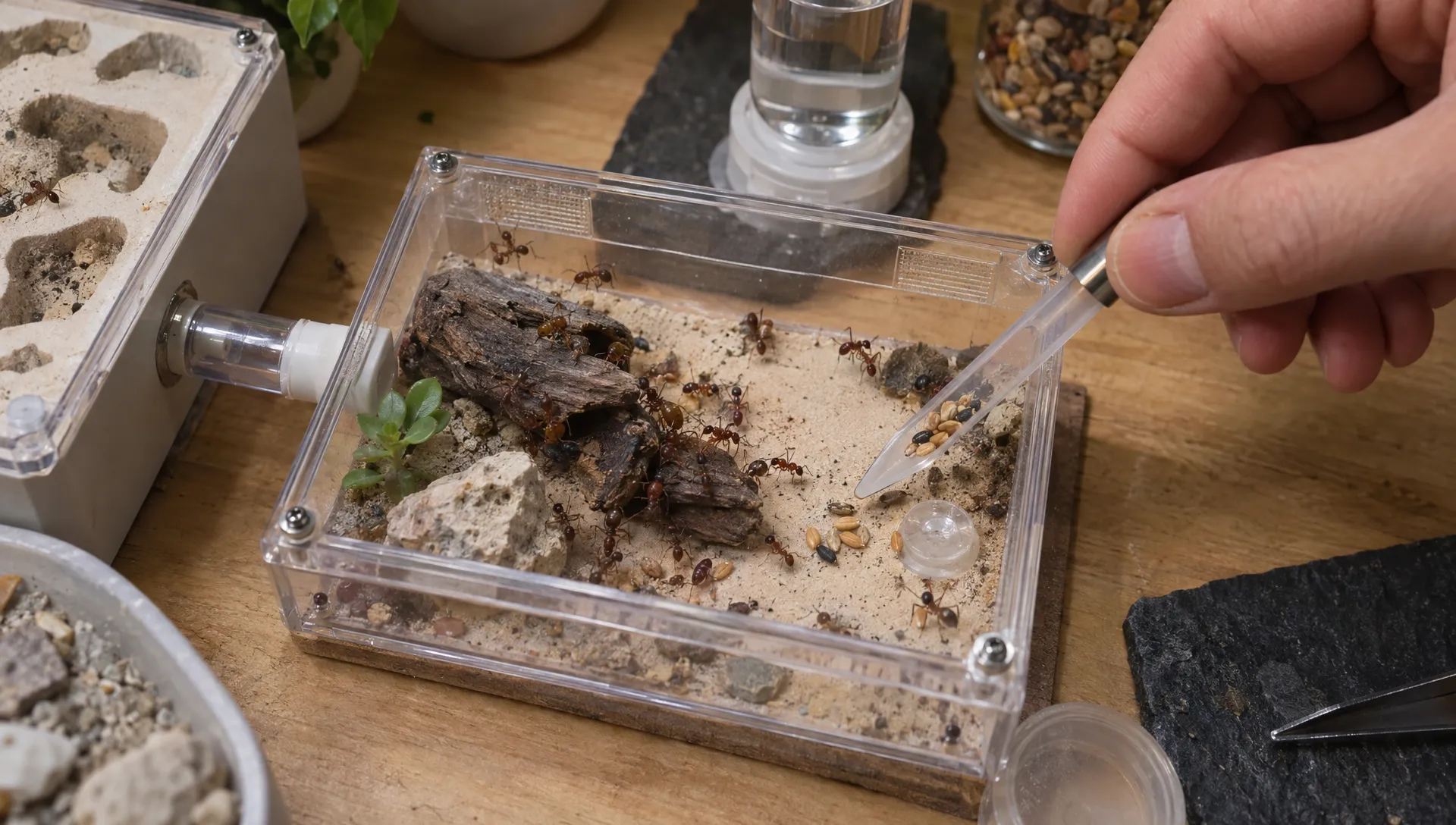
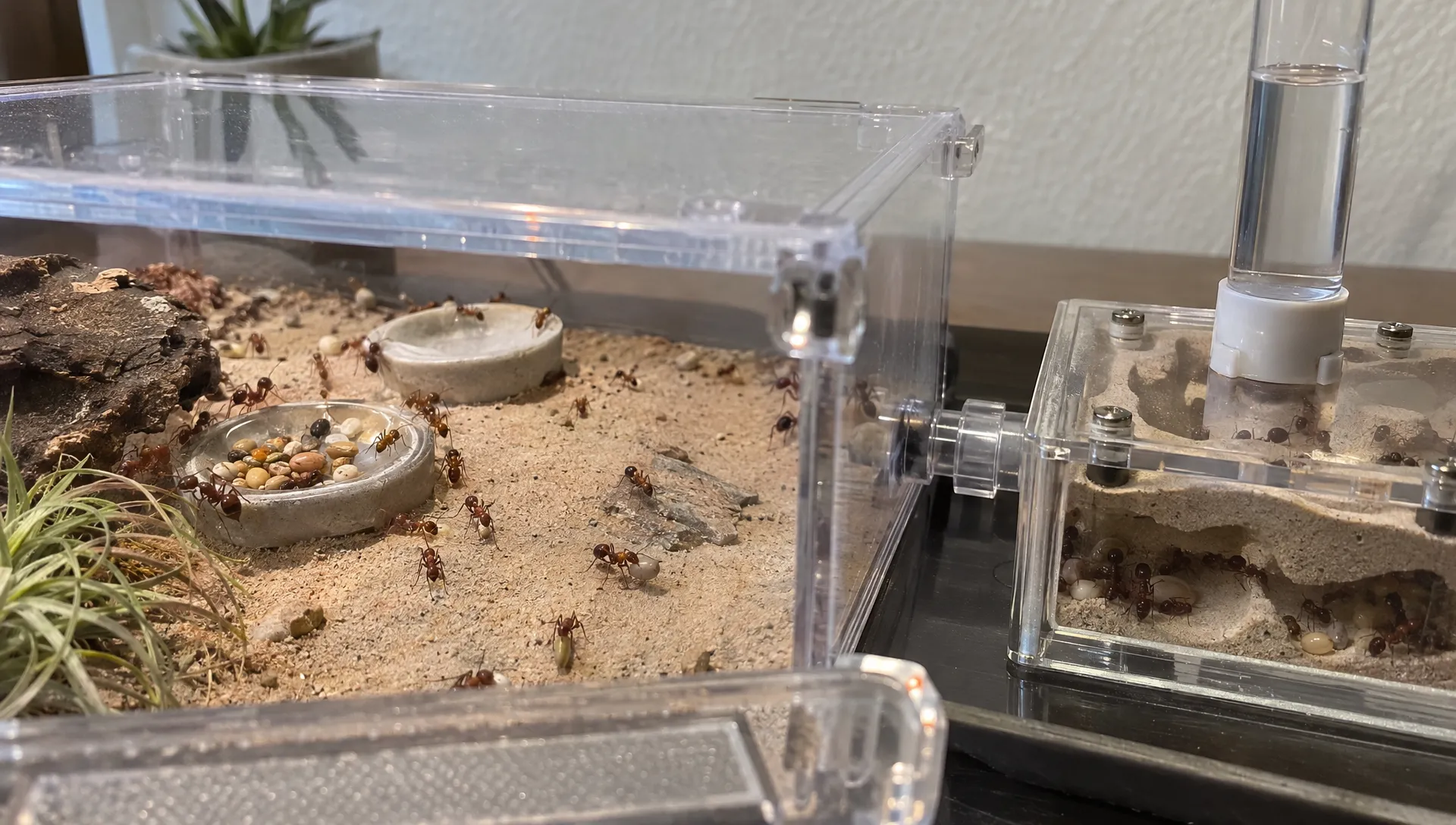
Choose a formicarium that allows a moisture gradient, with hydration concentrated in one area and genuinely drier space elsewhere. A separate outworld, the arena where workers forage and leave rubbish, makes feeding and cleaning easier.
| Habitat area | What it should provide | What to watch for |
|---|---|---|
| Hydrated nest zone | Species-appropriate moisture for the colony and brood | Flooding, persistent condensation or water reaching seed stores |
| Dry nest zone | Space where workers can store seeds away from hydration | Germinating seeds, damp husks or spreading mould |
| Outworld | Access to food, drinking water and removable waste | Spoiled food, leaking drinkers or escape routes |
For harvester ants in Canada, a stable indoor location is more useful than a sunny windowsill. Direct sun can overheat a small enclosure even when the room feels cool. Avoid radiators, draughty windows and shelves exposed to cleaning sprays.
Match nest size to colony size. A small colony may be better left in its suitable founding tube, connected to a secure feeding arena, than moved into a large nest it cannot maintain. Expand when the occupied space and species requirements justify it, rather than on a fixed timetable.
For the general assembly process, follow the guide to setting up an ant farm for a first colony, then adapt hydration and storage space to the identified harvester species. Gel habitats are not a suitable long-term substitute for a queenright colony’s nesting, feeding and moisture needs.
Feed seeds without overlooking water and protein
Start with small, suitable seeds
Offer a modest selection of untreated, additive-free seeds appropriate to the species and worker size. Small grass seeds or millet may be suitable starting options, but acceptance varies. Avoid coated planting seed, salted foods and flavoured bird mixes.
Young colonies may struggle to open large, hard seeds. Lightly cracking a small portion can make the contents accessible. Watch what workers actually collect and process before increasing the amount.
Caring for harvester ants in Canada does not require filling the outworld with food. Begin with a small offering and replenish according to consumption and storage. A large surplus makes damp seeds and hidden waste harder to notice.
Supply drinking water and appropriate protein
Seed storage does not replace drinking water. Provide a secure water source suited to small ants, such as a properly assembled water tube or a drinker with a protected drinking surface. Open dishes can drown workers, while leaking reservoirs can flood the nest.
Many harvester species also accept insect protein, particularly when larvae are growing. Follow the species care plan and offer small portions of appropriately sourced feeder insects rather than wild insects that may carry pesticide residues. Pre-killed food avoids injuries from live prey.
Check fresh food daily and remove uneaten portions before they spoil. Sugar water is not a universal requirement for seed-harvesting ants; use carbohydrate supplements only when appropriate for the species and in a feeder that limits drowning and sticky spills.
Manage temperature and winter rest by species
There is no single correct temperature or hibernation schedule for all harvester ants. Some temperate species require a seasonal rest, while other species follow different cycles. The room’s location in Canada does not determine the colony’s biology.
Before adding heat, obtain the species’ active-season temperature range, seasonal requirements and safe limits. Measure conditions near the nest, not just at the room thermostat. If supplemental heat is appropriate, use controlled equipment and heat only part of the setup so the ants retain a cooler retreat. Avoid heating the water reservoir directly.
Keeping harvester ants in Canada through winter often means managing dry indoor air, cold window surfaces and heating fluctuations. Check reservoir levels and actual nest conditions rather than assuming a heated room remains consistent.
Do not put a colony in a refrigerator simply because winter has arrived. Any cooling period needs a verified species-specific plan covering preparation, temperature, duration, hydration and gradual return to activity. Likewise, do not keep a temperate colony continuously hot to force year-round growth.
Plan delivery around Canadian weather
Compare policies before placing an order
Live-ant shipping deserves a closer look than ordinary parcel delivery. Before ordering harvester ants in Canada, ask whether the seller currently ships that species to your postal code and whether weather at the origin, destination or along the route could delay dispatch.
Compare these details before paying:
- Colony contents: The identified species, queen status and approximate worker count.
- Weather policy: Conditions that trigger a shipping hold and whether local pickup or carrier-depot collection is available.
- Arrival coverage: What the live-arrival policy covers, including whether the queen and workers are treated differently.
- Claim requirements: Required photographs or video, reporting deadlines and whether the remedy is a refund, replacement or credit.
Insulation and temperature-control packs do not make every shipping route safe in every season. Avoid arranging delivery when the parcel may sit unattended outside or remain in a vehicle for hours.
If ants arrive inactive or apparently injured
Bring the parcel indoors promptly and inspect it in a secure area where an escaping ant can be contained. Photograph the packaging and colony before changing the setup, following any claim-documentation instructions.
Cold-exposed ants can appear motionless without being dead. Allow the closed transport container to approach a stable indoor temperature gradually. Do not place it on a radiator, under a heat lamp or against a heat mat to accelerate recovery.
Keep the colony quiet and avoid shaking, tapping or dumping it into a new nest. If the container is leaking, damaged or visibly unsafe, contact the seller promptly for transfer instructions. Report suspected overheating, injuries or deaths within the stated claim window rather than waiting several days.
Prevent stings, escapes and chemical exposure
Some harvester ants, including many Pogonomyrmex, can deliver painful stings. Others may bite. Do not handle workers with bare fingers or treat a slow-moving colony as harmless.
Use a secure lid, appropriate ventilation mesh and escape prevention suited to the enclosure. Check cable openings, tubing connections and feeding ports. Keep the habitat away from young children and pets, particularly where an animal could knock it over. Someone with a known serious insect-sting allergy should discuss the risks with their healthcare professional before keeping stinging ants.
Safe care for harvester ants in Canada also means controlling household chemical exposure. Keep insecticides, aerosol cleaners and fragranced sprays away from the enclosure.
Use dedicated ant-care equipment. A spray bottle previously used for car-care and detailing products should not be repurposed for nest hydration, even after rinsing. The same separation applies to cloths, brushes and containers that have held household cleaners. Avoid introducing residues while trying to clean the habitat.
Use a simple routine and troubleshoot changes
Daily and weekly checks
A brief daily check should cover drinking water, hydration levels, temperature, escape points and any fresh food. Observe without repeatedly opening the nest or exposing the queen to bright light.
Weekly, inspect accessible seed stores for dampness or germination and remove rubbish from the outworld with dedicated tools. Check tubing and seals, then note changes in brood, feeding and worker activity. Colony trends are more useful than counting every ant each day.
With harvester ants in Canada, record changes in household heating alongside nest conditions. A reservoir that lasted well in autumn may empty faster once winter heating runs regularly.
Respond to patterns, not one unusual moment
| Observation | Possible explanation | Sensible first response |
|---|---|---|
| Seeds are sprouting or mouldy | Stored seeds are too damp | Remove accessible affected material and reassess hydration placement |
| Workers repeatedly cluster at the water source | Increased water demand or unsuitable nest moisture | Check the drinker, reservoir and moisture gradient |
| Most ants crowd the coolest available area | Excess heat may be affecting the nest | Measure temperatures and reduce supplemental heating if excessive |
| Seeds remain untouched | Wrong seed size, unsuitable seed type or low demand | Try a smaller suitable offering and check the species diet |
| Sudden widespread inactivity or deaths | Temperature stress, dehydration, contamination or another problem | Check conditions immediately and contact the seller with photos and readings |
These observations are clues, not diagnoses. Avoid changing heat, moisture and food simultaneously unless there is an immediate hazard; otherwise, it becomes difficult to identify what helped.
Frequently asked questions
Can harvester ants live in Canada? Some harvester species occur naturally in parts of Canada, while captive care depends on the particular species and lawful sourcing. Native occurrence does not mean a colony belongs outdoors in your area or can be moved without restrictions.
Do harvester ants bite or sting? Depending on the species, they may bite, sting or both. Many Pogonomyrmex have painful stings. Use secure equipment and avoid direct handling.
Can I start with workers only? A worker-only group is not a substitute for a queenright colony if your aim is long-term growth. Confirm that the colony includes a mated queen before buying.
Are harvester ants in Canada suitable for beginners? They can be, provided the species is correctly identified and its moisture, temperature, seasonal and safety requirements suit your household. An established starter colony with clear care instructions reduces uncertainty.
Should I feed a newly arrived queen immediately? Follow the species’ founding requirements and the seller’s arrival instructions. Fully claustral and semi-claustral queens have different needs, so feeding advice for one should not be applied automatically to the other.
Choose the colony before choosing the kit
Ant Farms Calgary offers live colonies, starter kits, modular formicariums and ant-care advice. Before ordering, ask which currently available species suits your experience, location and ability to provide seasonal care. Browse the live ant selection and confirm identification, queen status, habitat compatibility and shipping arrangements before committing to a particular colony.




Leave a comment