

$35.00
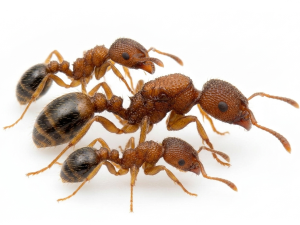
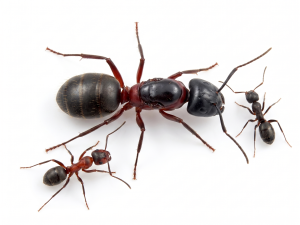
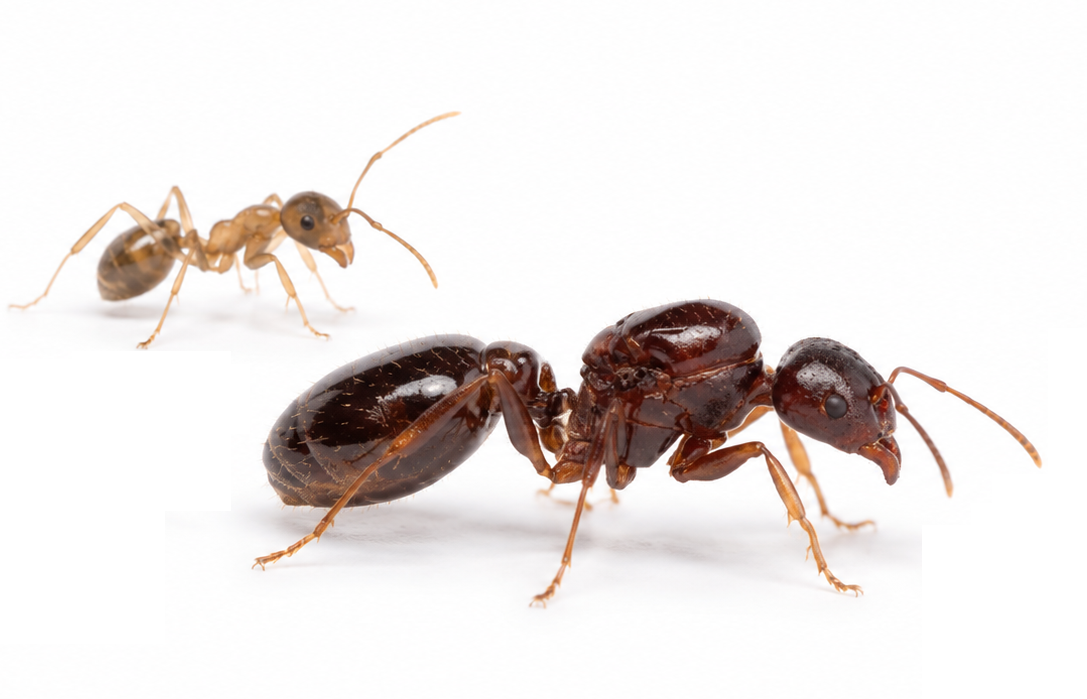
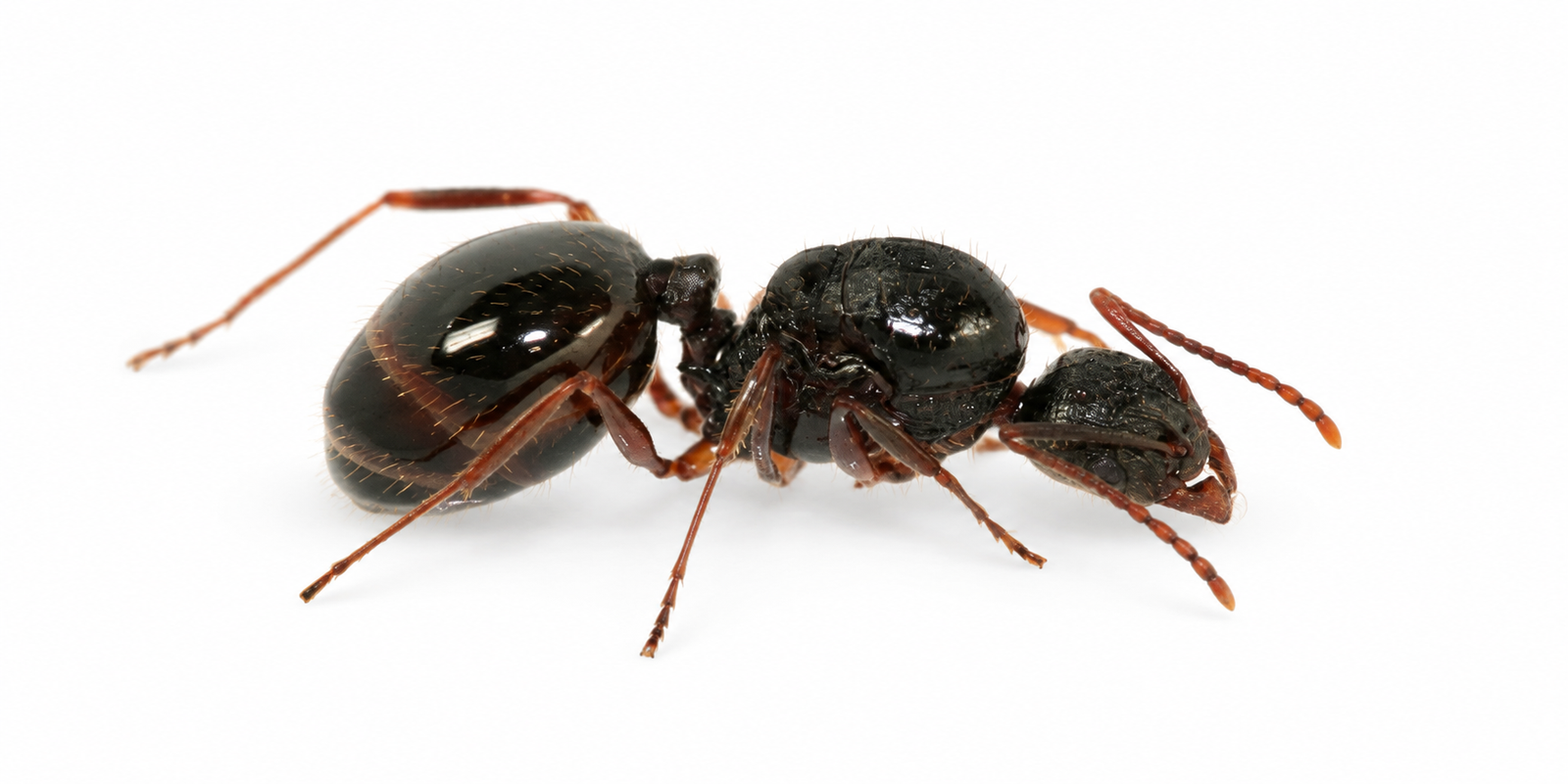
Aphaenogaster picea is a slender and elegant North American woodland ant, recognized by its glossy dark brown to nearly black coloration, long legs, and agile movements. These resourceful ants are generalist scavengers and predators that feed on small insects, sweet liquids, and seeds with nutrient-rich attachments. Native to eastern North America, they thrive in moist deciduous and mixed forests, commonly nesting beneath stones, inside rotting wood, or under loose bark. Their active foraging, seed-dispersing behavior, and graceful appearance make them a fascinating choice for ant-keepers seeking an engaging native species.
Size: Queen: 8–10 mm, Workers: 4–6 mm
Shipping: Available to all locations in Canada except during the winter period.
Live Arrival Guarantee: If the ant colony arrives dead or in poor condition, please contact us for assistance.
4 in stock
Description
Overview
Aphaenogaster picea, commonly called the pitch-black collared ant, is a slender woodland species native to eastern North America. Its long-legged workers are active scavengers, predators, and seed dispersers. Although usually cautious rather than aggressive, they move quickly when disturbed and are fascinating to observe while foraging.
Appearance
- Workers are typically 4–6 mm long.
- The body ranges from dark reddish-brown to nearly black, often with slightly lighter legs and antennal tips.
- Workers have a slender build, long legs, and elongated antennae.
- The waist consists of two distinct segments, giving the ants a narrow, delicate appearance.
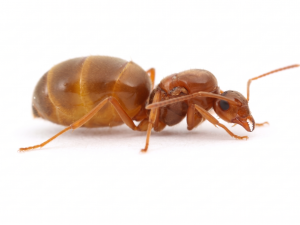
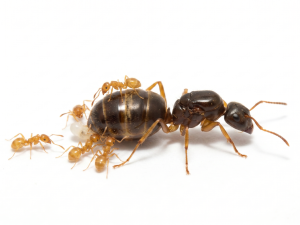
- Queens are larger, generally around 8–10 mm, with a broader thorax and darker coloration.
Distribution & Habitat
- Found across parts of eastern Canada and the eastern United States.
- Primarily inhabits moist deciduous and mixed forests, including shaded woodland edges.
- Nests are commonly established beneath stones, inside rotting wood, under bark, or near the bases of trees.
- The species prefers cool, humid environments with abundant leaf litter and decaying wood.
Behavior & Diet
- Aphaenogaster picea is a generalist scavenger and predator, feeding on dead insects and small arthropods.
- Workers also consume sweet liquids, including nectar, fruit juices, and honeydew.
- They collect seeds with nutrient-rich attachments called elaiosomes, making them important forest seed dispersers.
- Workers forage across the forest floor and may also climb tree trunks in search of food.
- Colonies are generally monogynous, containing a single reproductive queen.
Colony Structure
- Colonies commonly contain several hundred workers, although established colonies may become moderately large.
- Workers are monomorphic, meaning there is no distinct soldier caste.
- Queens establish new colonies independently after mating.
- Colony growth is moderate, with activity and brood production slowing considerably during the winter diapause period.
Nuptial Flights
- Nuptial flights generally occur from mid-July through late August.
- Flight timing varies depending on latitude, temperature, rainfall, and humidity.
- Mating flights are most likely during warm, humid summer weather.
- After mating, queens remove their wings and search for a sheltered cavity in soil or decaying wood in which to establish a new colony.
Additional information
| Weight | 0.440925 lbs |
|---|---|
| Dimensions | 3.93701 × 3.93701 × 3.93701 in |
You may also like…
-
Modular Farm 2XL kit – Brown
$90.00 Add to cart -
Modular Farm 3XL kit – Green
$120.00 Add to cart -
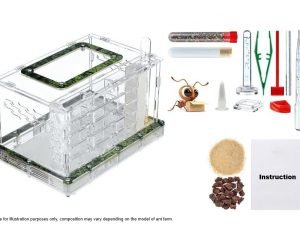
Modular Farm 3XV kit
$125.00 Select options This product has multiple variants. The options may be chosen on the product page